
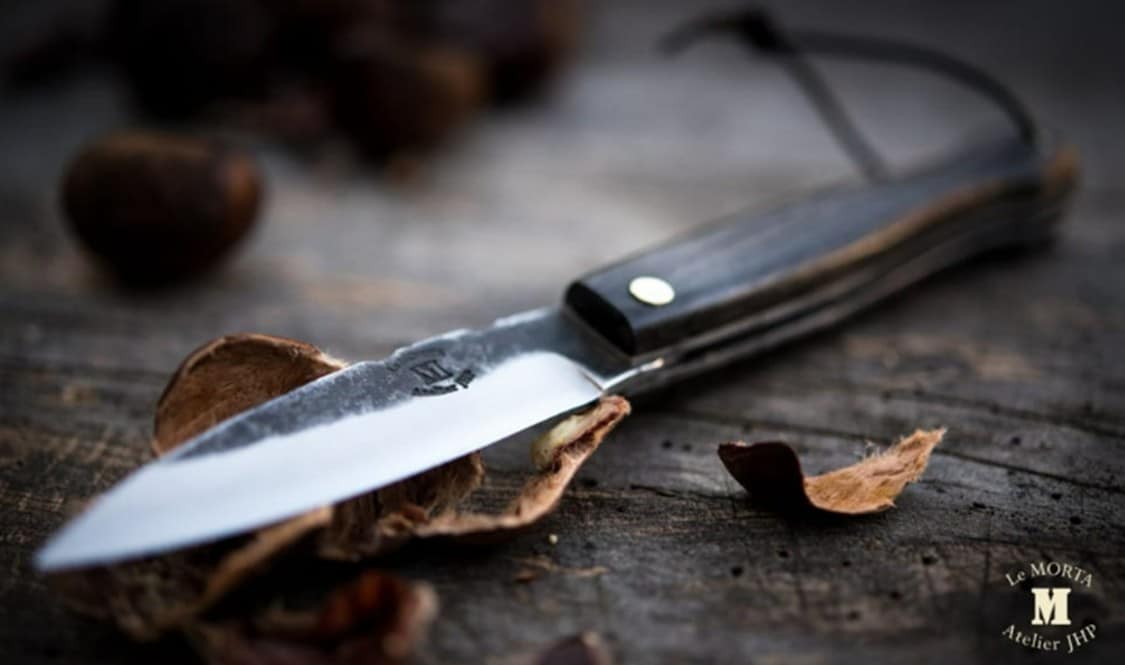

The fire crackles in the forge. The hammering sets the pace for the workshop. In a few hours, a rough blade will be born from this block of 90MCV8 steel. In the meantime, the cutler-blacksmith will have meticulously followed the traditional steps: heating, shaping, annealing, quenching, tempering, and grinding. The art of forging has always been part of cutlery making. It is part of a tradition that dates back thousands of years. Forging techniques in cutlery making have stood the test of time, and the blades have not aged a bit. Combined with a Morta handle, forged knives bring together two fundamental elements: earth and fire. Here’s how!
📌 Key Takeaways: Forging Techniques in Cutlery
- Millennia of evolution: Knife forging spans from prehistoric metalworking through medieval specialization to modern artisanal practice, with French cutlery tradition formally established in the 15th century.
- Multiple forging methods: Free forging with hammer and anvil, press and drop hammer work, folding and welding for Damascus blades, and stretching with grinding – each suited to different steels.
- Critical heat treatment: The process includes heating, shaping, annealing, normalizing, hardening via thermal shock in oil or water, and tempering at 437-464°C for optimal blade properties.
- Superior microstructure: Hammering and thermal cycles develop a refined grain structure in forged blades, yielding stronger edge retention and enhanced durability compared to stamped alternatives.
- Artisanal heritage at Morta: Cutlers Jean-Henri and Marco combine ancestral forging knowledge with modern metallurgical understanding to produce unique, handcrafted blades.
The art of knife forging: a craft that transcends time
Since ancient times, blacksmiths have been crafting sharp tools (hunting knives, kitchen knives, and weapons). However, even in prehistoric times, humans heated and hammered metal to shape it as they wished. In the Middle Ages, blacksmiths customized knives according to social class. Peasants used simple knives for practical tasks. The nobility preferred chiseled blades, symbols of wealth and status. Blacksmithing thus became an art form.
In France, the cutlery tradition began in the 15th century. Then, the Industrial Revolution brought new forging processes that enabled mass production. From then on, traditional forging became an art form.
Today, cutlers combine the ancestral know-how of forging with knowledge of metallurgy to create exceptional knives that are sharp, strong, and durable.
Always striving for innovation, knife smiths work with raw steel, stainless steel, alloys, and Damascus steel. The skill remains timeless: the art of precision for high-quality craftsmanship.
Forging techniques used in cutlery: between hammer and anvil
Each blacksmith or cutler chooses the method according to the desired shape and the steel selected.
Free forging is done with a hammer on an anvil. The movement remains key: short strokes, control of the edge, regular rhythm. Hammering allows the material to be stretched, refined, and centered.
A press or drop hammer is used when the piece requires repetition or power. These tools speed up the process without replacing manual adjustment.
Folding and welding are used for Damascus blades or composite constructions. This technique involves layering, folding, welding, and then reworking the surface.
Stretching and rough grinding use a file, backstand, or grinding wheel. These techniques rough out the profile before heat treatment.
For tempering, the cutler chooses the appropriate method: total tempering, selective tempering, or differentiated treatment of the edge. This is followed by tempering in the oven to restore elasticity.
Polishing combines mechanical abrasives and manual passes. Final sharpening is done with a stone, coticule, or leather depending on the desired angle.
Finally, certain finishes require traditional techniques: burnishing, patina, handle adjustment. Each forging technique connects the tool to the hand that uses it.
Other processes exist: die forging, extrusion, cold rolling, stamping, cold hammering, and electro-upworking. These are not used in their automated industrial form for the manufacture of hand-forged artisan knife blades. Some cutlery manufacturers use dies with drop hammers while maintaining an artisan approach.
The main stages in forging a handmade knife
Before starting any forging work, the cutler puts on his protective equipment: goggles, leather apron, gloves and, if necessary, ear protection. He ensures that there is adequate ventilation.
Heating the forge
Using tongs, the cutler places the steel (90MCV8, 14C28N, or other) in the center of the forge to bring it up to temperature. Temperature control is essential throughout the forging process. The ideal temperature varies depending on the steel.
Shaping the flat side
The blacksmith creates a flat side corresponding to the widest section of the blade. He stretches and hammers the steel until he obtains the desired initial shape. He then refines the tip to gradually bring out the cutting edge.
Annealing and normalizing
After forging, the cutler slowly cools the steel, sometimes overnight in the dying forge or for a few hours in vermiculite: this is annealing. This softens the steel and makes it easier to file.
Normalizing takes place after annealing and rough grinding, just before quenching. It consists of heating the steel to tempering temperature and then allowing it to cool in the open air to homogenize the structure and refine the grain. This operation is repeated several times (usually three) depending on the steel, thus eliminating internal stresses and preparing the blade for successful tempering.
Hardening
Hardening toughens steel through thermal shock. The heated piece is quickly immersed in a suitable medium (oil, water, or air, depending on the alloy and the desired effect).
Before hardening, blacksmiths always leave a slight excess of material on the grind. This allows for the correction of any deformations after heat treatment.
Tempering
After hardening, the blade is placed in an oven for tempering, generally between 437 and 464°C depending on the steel. This treatment reduces internal stresses and restores ductility. In other words, the metal’s ability to deform without breaking.
Grinding and finishing
Grinding refines the forging work by abrasion (file, backstand). It creates the flats and prepares the cutting edge profile. The subsequent grinding removes the rough appearance before the final polishing. The latter can be mirror or satin finish depending on the desired result. The blade is then ready for final sharpening. Some cutlers sharpen the blade before mounting it on the handle, others do so afterwards.
Each craftsman chooses the appropriate process according to the steel used and the desired aesthetic.
Advantages of forged knives: the strength of authentic beauty
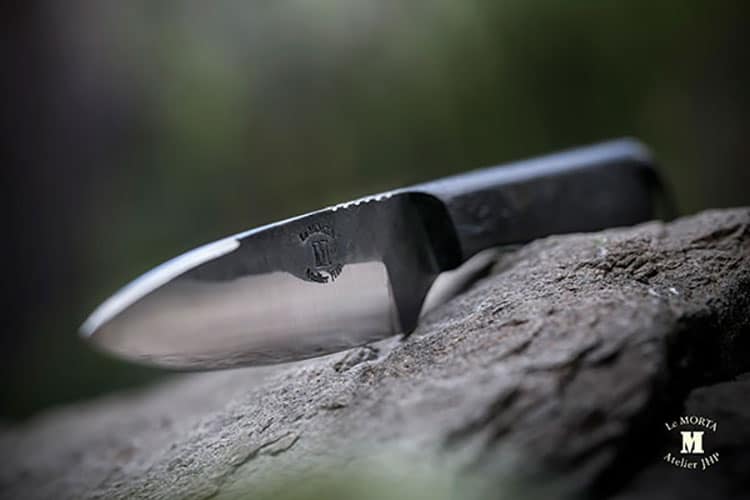
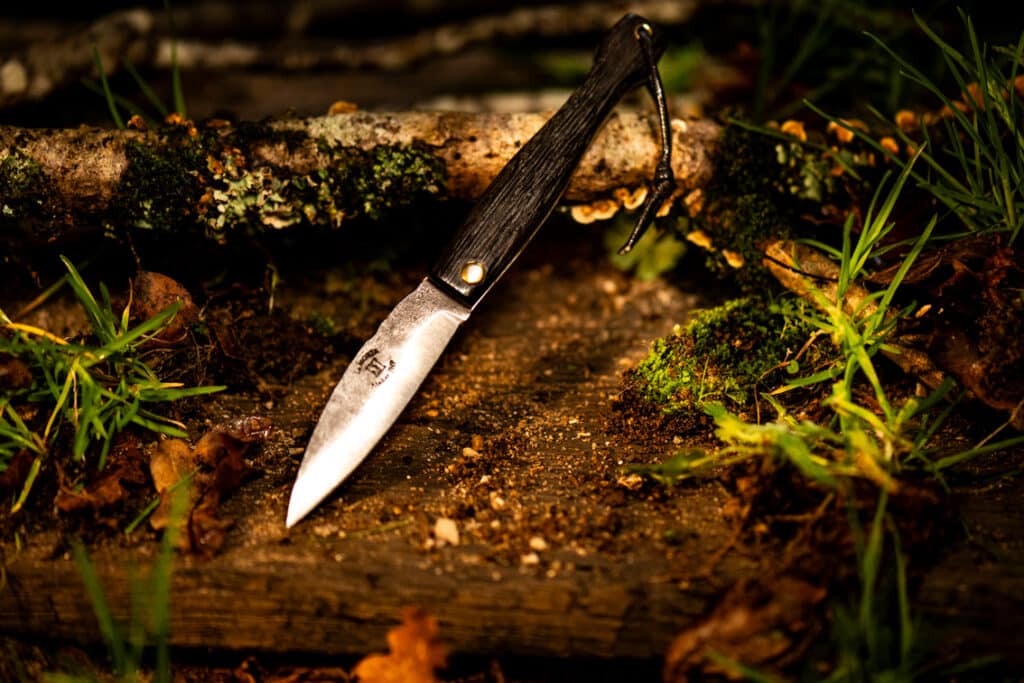
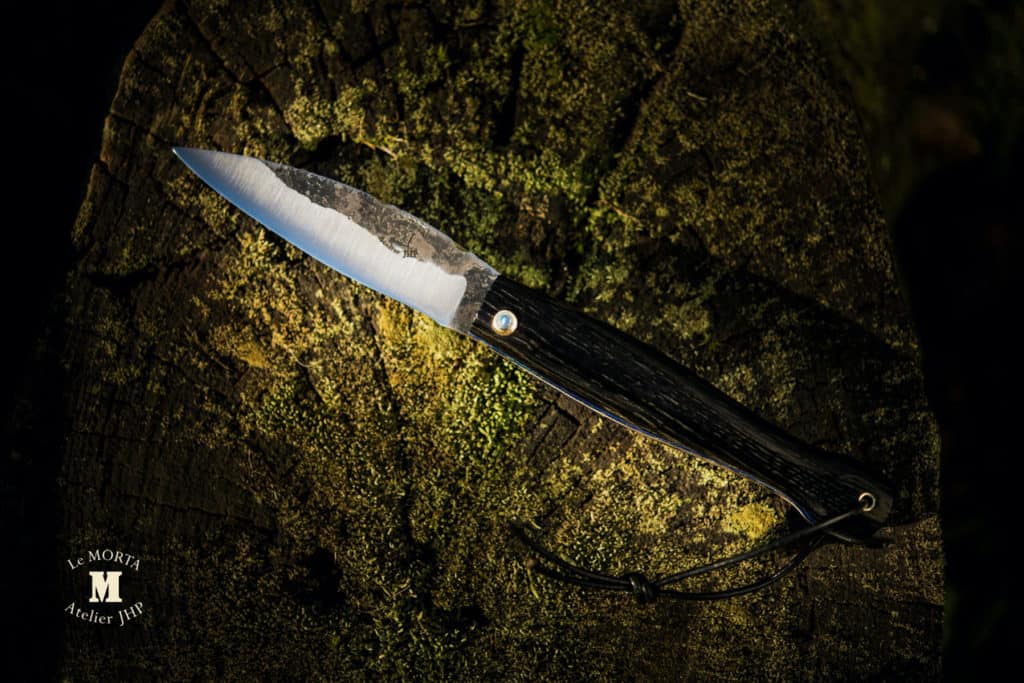
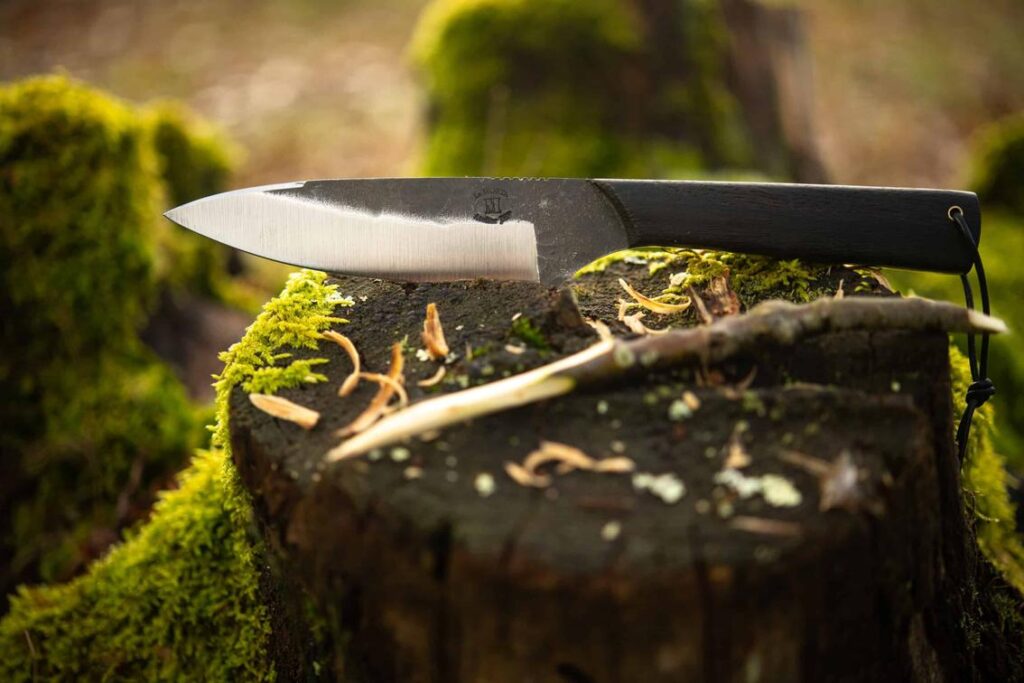
A forged steel blade, such as those in the Morta Brut de forge collection, reveals the steel in all its authenticity. Forging keeps the material alive and gives it character.
The natural weight of the blade improves ergonomics. It balances with the Morta handle for a secure grip.
Hammering and thermal cycles homogenize the microstructure of the metal. The blade gains in strength and edge retention. The result: a durable cutting edge and precise cutting.
Forging is not just a metallurgical technique, it is a skill that has been passed down through the generations. This ancestral know-how inscribes each knife in a continuum of history, culture, and heritage. Buying a forged blade means supporting this artisanal heritage.
Forged steel is easy to maintain. After use, simply wipe the blade with a soft, dry cloth to preserve the patina of the handle.
Forging at JHP Cutlery: passion at the heart of the craft
For almost 10 years, we have been forging in our Couteaux Morta workshop in the heart of the Brière region.
Jean-Henri (artisan cutler) or Marco (cutler with a passion for forging since the age of 10) place the 90MCV8 steel block in the forge heated to 920°C.
Between the hammer and the anvil, the material slowly takes shape over several back-and-forth movements. Yes, the forge also respects the time needed to maintain the perfect temperature.
Morta waited 5,000 years to be extracted from the soil of Brière, so the metal can wait a few hours.
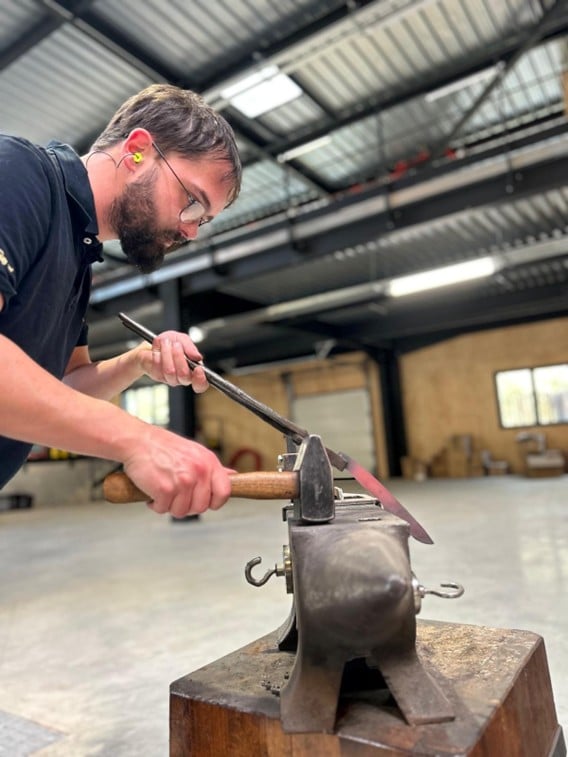
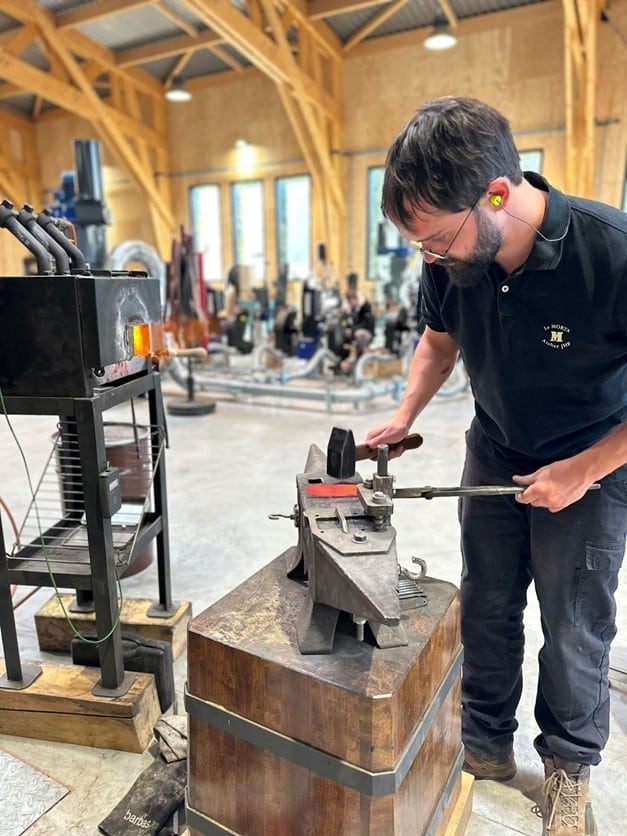
Once forged, a precise hammer blow marks the future blade with the Morta Knives logo.
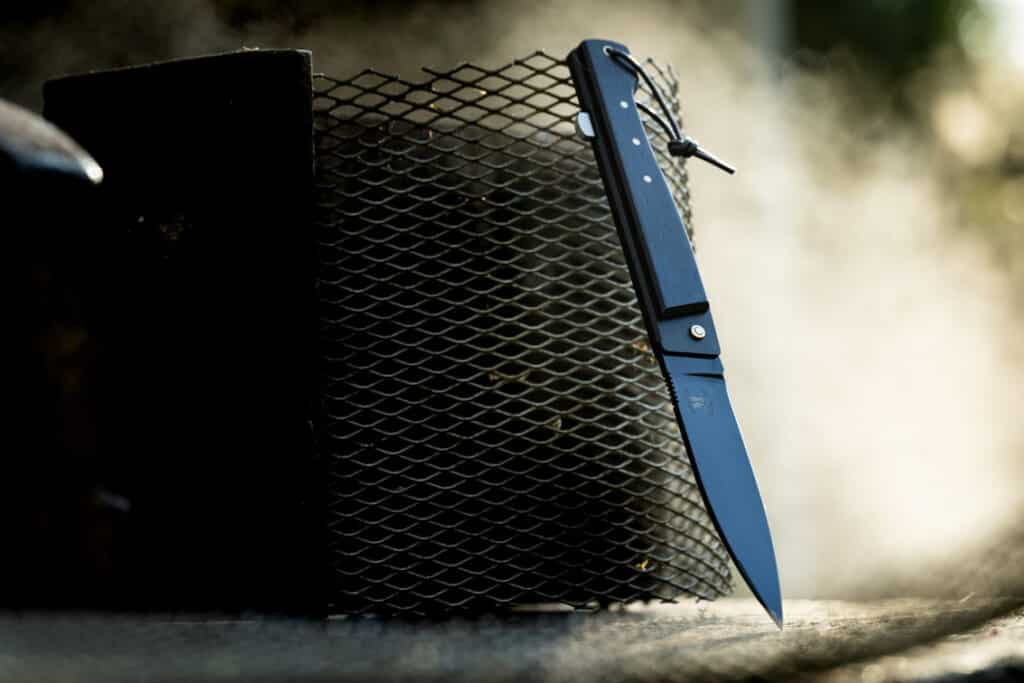
Discover Marco’s favorite folding knife: the Morta rear pump.
The steel is then cooled as slowly as possible until it returns to room temperature, making it easier to handle by hand. About 24 hours later, the cutler reheats the steel to 820°C before dipping it in a special technical oil to ensure the perfect quality of the future blade.
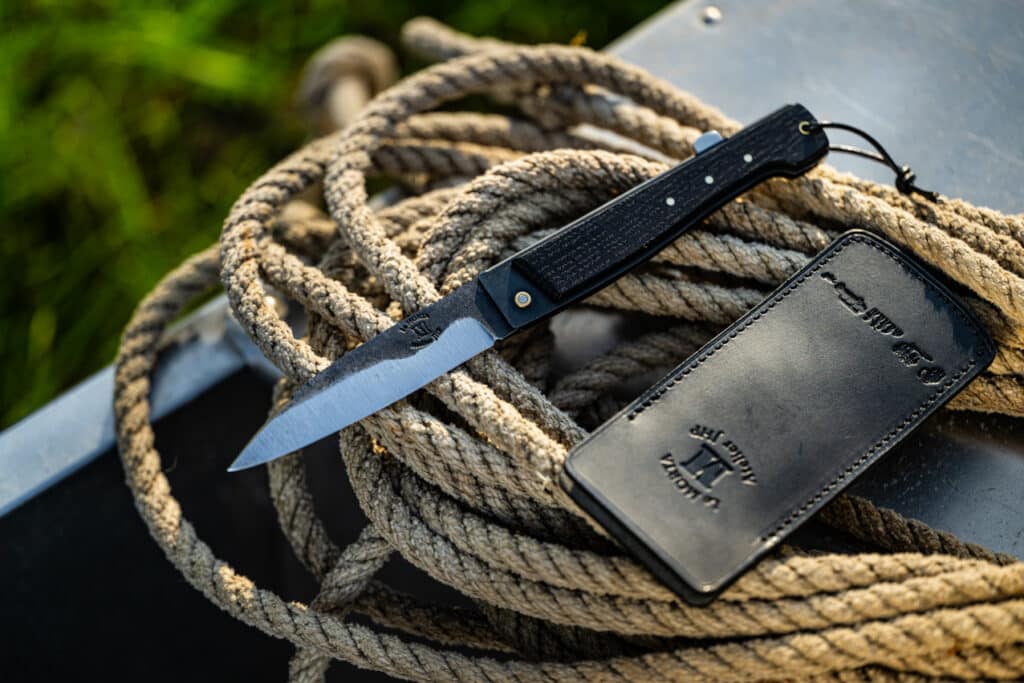
Finally, once the hardening process is complete, the cutlery smiths proceed with heat treatment. Here, precise adjustment of the temperature and time ensures optimal hardness and ductility.
The Brute de Forge blade is now ready to meet its other half: the Morta handle. Bound together for eternity, they form a knife made of passion and noble materials. Together, they symbolize the union of the elements: Earth and fire.
(Temperatures are given as a guide only.)
Forging techniques in cutlery require precise movements for a demanding art. With patience and attention to the materials, the fire gives birth to the blade, the wood to the handle. The hand of man creates the knife, a unique and exceptional piece cradled by time and the passion of the craftsman.
Discover our cutlery creations with forged steel blades.
Article written by the sharp pen of Christelle Lorant.🪶
What are the main forging techniques used in cutlery?
The main techniques include free forging with hammer and anvil using short, controlled strokes, and folding and welding to create Damascus or composite blades through layering. Mechanical assistance with presses or drop hammers is used for repetitive pieces requiring power. After shaping, tempering methods including total, selective or differentiated edge treatment restore the blade’s elasticity.
What are the key stages in forging a handmade knife?
The process begins with heating the steel in a forge to the correct temperature, then shaping the blade through hammering on an anvil. After forging, annealing involves slow cooling overnight to soften the steel, followed by normalising which repeats three times to eliminate internal stresses. Hardening through thermal shock in oil, water or air is followed by oven tempering at 437-464 degrees C to restore ductility.
Why are forged knives considered superior?
Forging keeps the material alive and gives it character. The hammering and thermal cycles homogenise the metal microstructure, increasing strength and edge retention for durable, precise cutting. The natural blade weight also improves ergonomics and balances with handles for secure gripping.
How does the JHP Cutlery workshop forge its knives?
At the Couteaux Morta workshop in Briere, artisans Jean-Henri and Marco place 90MCV8 steel blocks into forges heated to 920 degrees C. After shaping between hammer and anvil, a precise hammer blow marks each blade with the Morta Knives logo. The steel then cools slowly to room temperature, and approximately 24 hours later reheats to 820 degrees C before dipping in special technical oil for optimal blade quality.
What types of steel are used in knife forging?
Modern cutlers work with raw steel, stainless steel, alloys and Damascus steel to create sharp, strong and durable blades. Specific grades like 90MCV8 and 14C28N are used in the forging process, chosen for their properties when heated and treated. The choice of steel also determines the hardening method, whether oil, water or air quenching.
How should you maintain a forged knife?
Maintenance is straightforward: simply wipe the blade with a soft, dry cloth to preserve the patina. This preserves the natural finish that develops through the forging process.
Share on social networks