

Damascus steel, known for its rippling patterns and reputation for robustness, has long captivated knife enthusiasts and metallurgy connoisseurs. But what makes this steel so special, and more importantly, why is it considered expensive? At Couteaux Morta, we take pride in our range of Damascus steel knives, forged with passion and precision. In this article, we’ll delve into the mysteries of Damascus steel, from its history to its modern manufacturing, while highlighting why our Damascus knives are a quality investment.
📌 Key Takeaways: Is Damascus Steel Expensive?
- Labor-intensive forging: Damascus steel requires repeated heating, folding, and hammering of multiple steel layers, making it significantly more time-consuming than standard steel production.
- Premium pricing justified: The combination of skilled craftsmanship, quality materials, and lengthy forging process accounts for the higher cost compared to conventional blades.
- Long-term investment: A well-maintained Damascus knife can last generations, making the initial higher price a worthwhile investment over time.
- Unique pattern value: Each Damascus blade has a one-of-a-kind pattern created during the forging process, adding collectible and aesthetic value.
- Price varies widely: Cost depends on the number of steel layers, the smith’s expertise, handle materials, and finishing details.
Where does Damascus steel come from and why is it so renowned?
Damascus steel originates from the city of Damascus, a historical center of metallurgy. This type of steel was famous for its exceptional strength and sharpness, often used in swords and knives since ancient times.
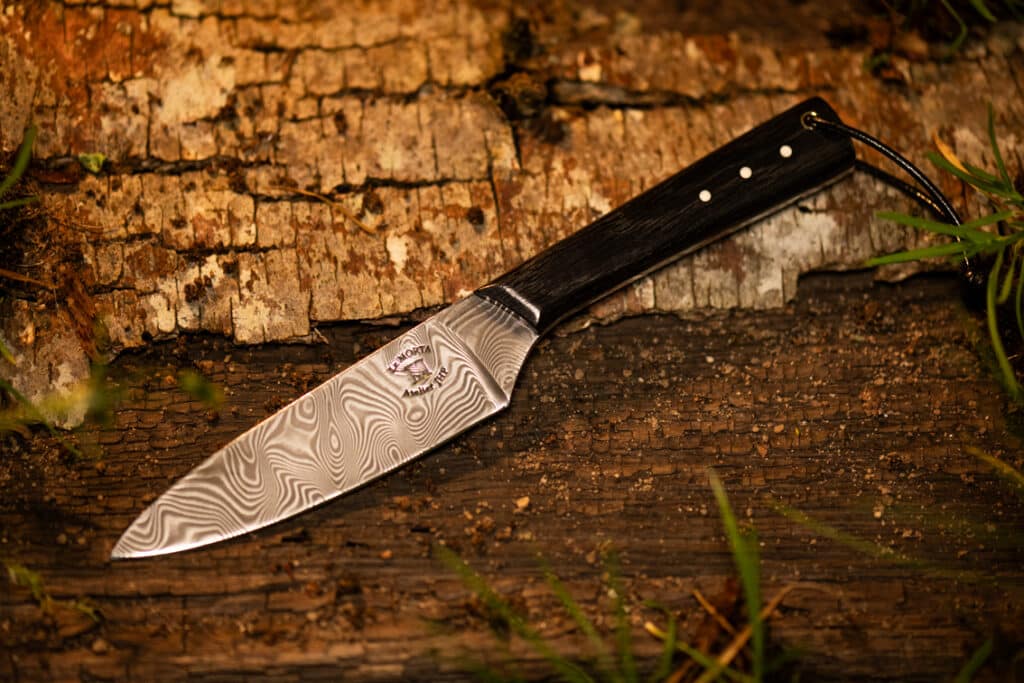
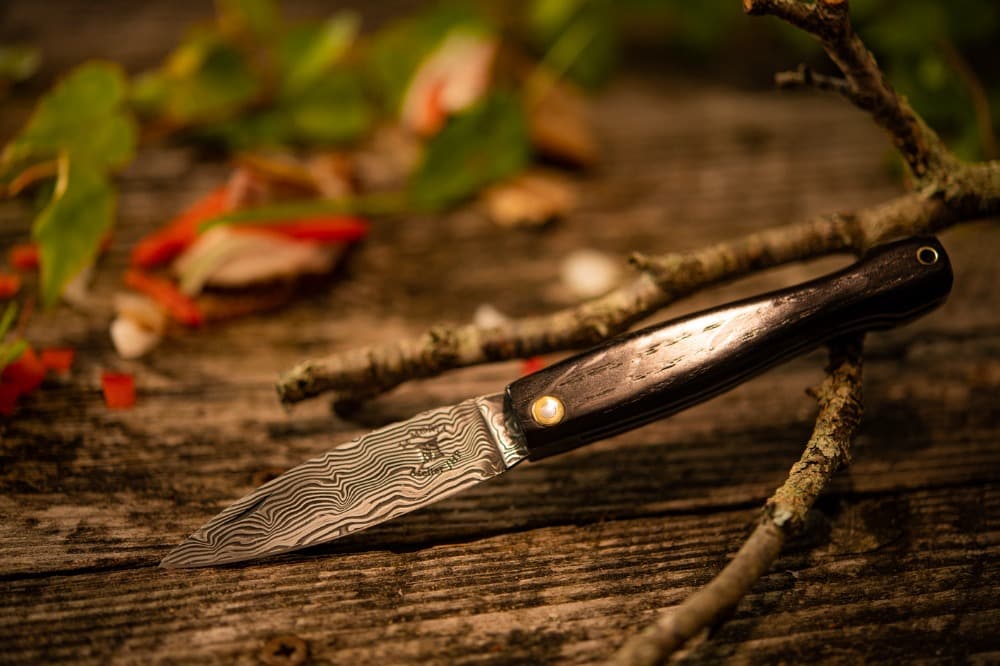
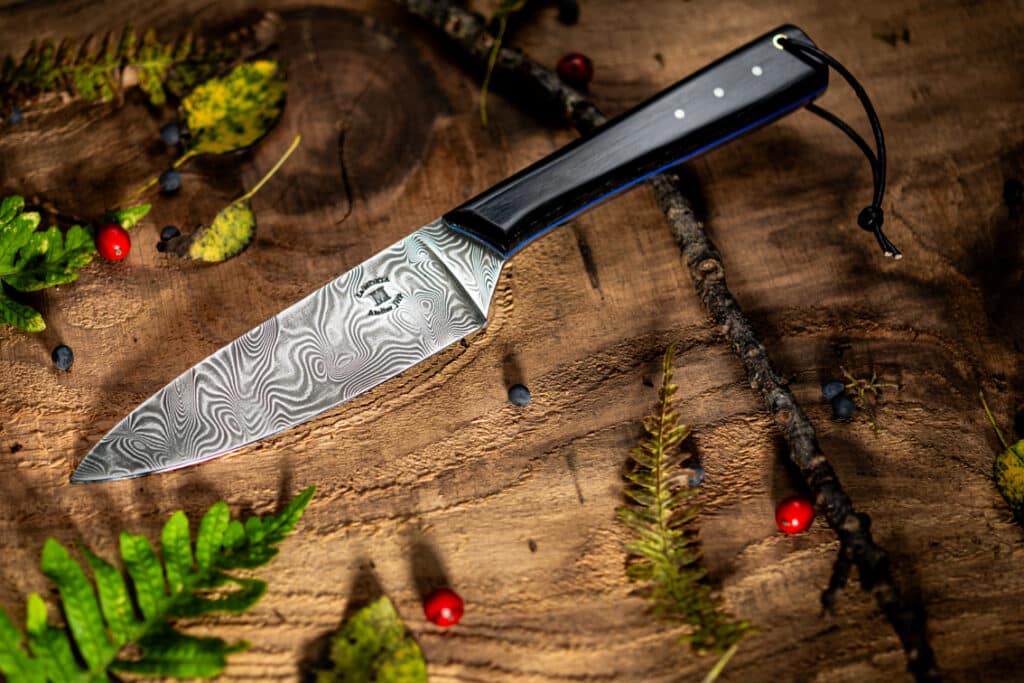
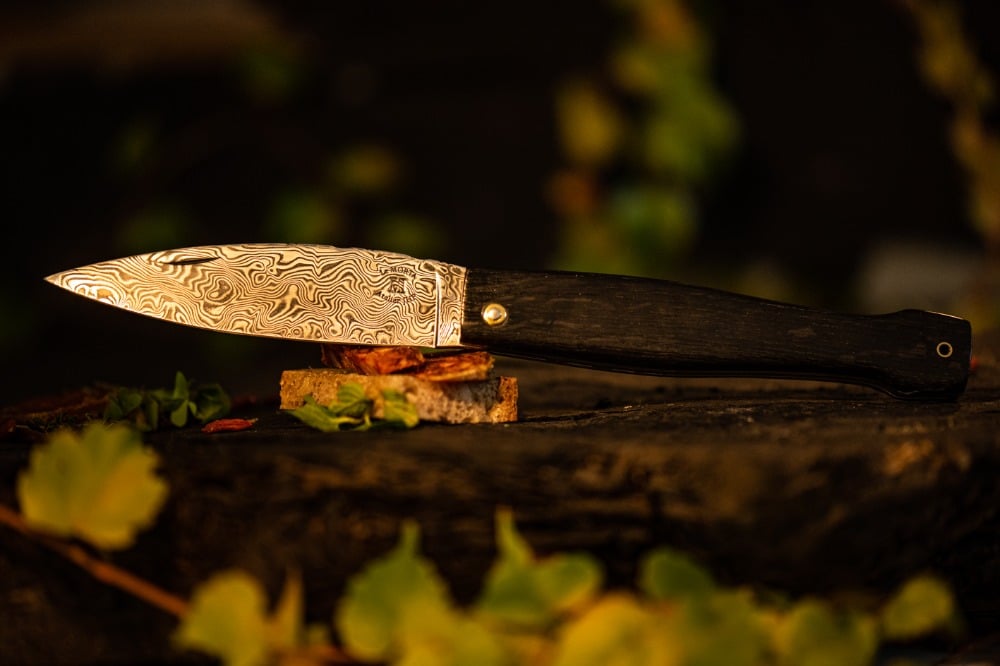
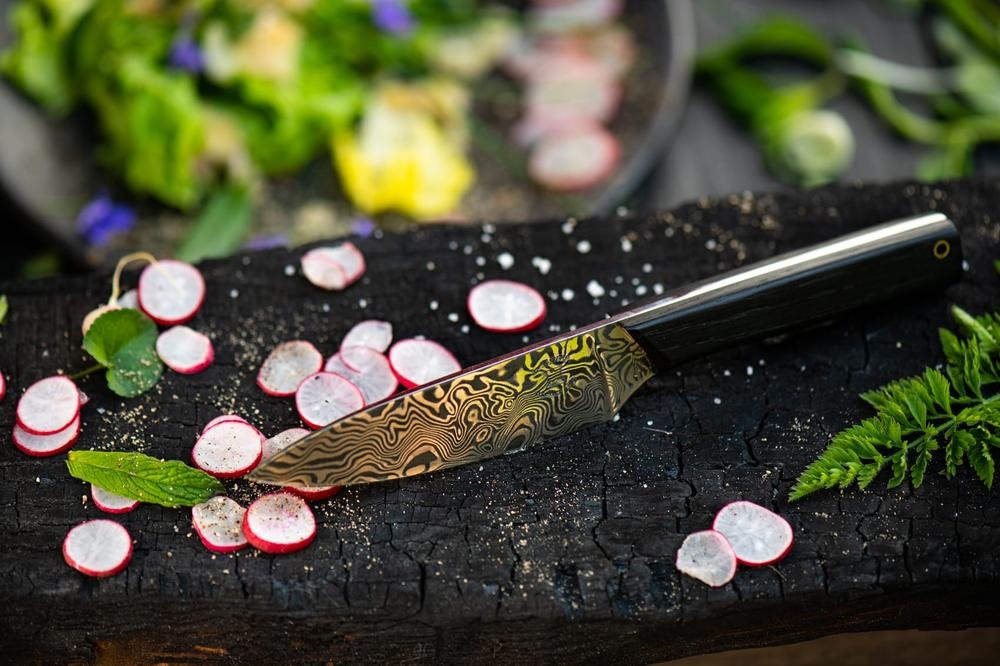
The distinctive patterns of Damascus steel, resembling waves or swirls, result from a unique forging process, where different types of steel are combined. What sets Damascus steel apart is its blend of hardness and flexibility. Thanks to the fusion of carbon steel and other alloys, Damascus blades offer enduring sharpness while being flexible enough to not break under stress.
At Couteaux Morta, we use this traditional method to create knives that are not just tools, but true works of art.
How is Damascus steel made?
The making of Damascus steel is an art in itself. It begins with selecting different types of steel, often a mix of high carbon steel and softer steel. These steels are layered, heated, and forged together, then folded and reforged multiple times. This folding and forging process creates the characteristic patterns of Damascus steel.
Thus, each piece of Damascus steel is unique. Indeed, these patterns are not just aesthetic; they reflect the smith’s skill and the quality of the forging. At Couteaux Morta, we take special care at each step of this process, ensuring that each Damascus knife is an exceptional piece, with patterns as beautiful as they are functional.
How are knives made at Couteaux Morta?
The creation of our knives is a perfect fusion of traditional craftsmanship and modern techniques. The process starts with a meticulous selection of the best steels, including Damascus steel, to ensure the superior quality of each knife. We adopt an innovative approach using powder metallurgy, an advanced technique that involves mixing different types of steel powder. These powders are then compressed under high pressure to form a solid block.
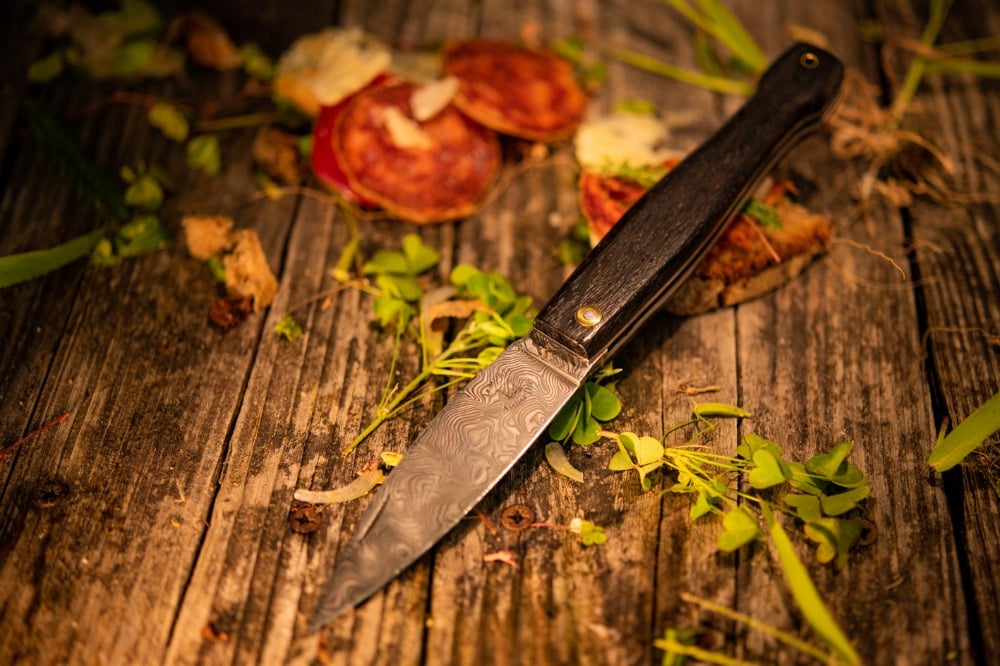
This block is heated, allowing the powders to merge and create the distinctive patterns and layers characteristic of Damascus steel. Each blade, once formed, undergoes meticulous manual sharpening, ensuring an exceptional edge. The final assembly of the knife is carried out with extreme precision, incorporating high-quality materials for the handle, notably Morta, a unique fossilized wood.
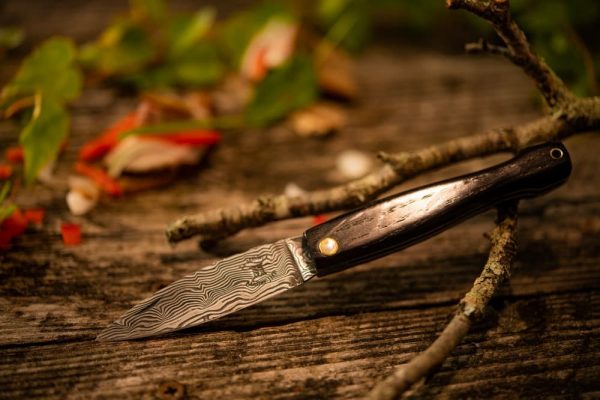
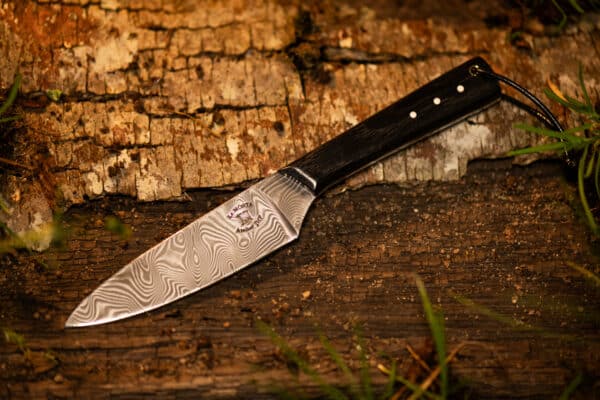
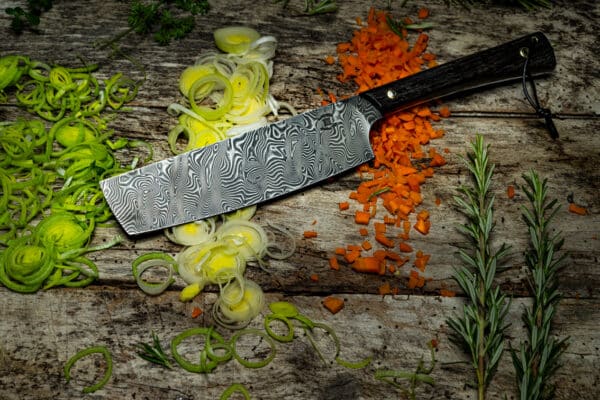
Thus, our Damascus steel knives stand out not only for their exceptional durability, thanks to the combination of different steels, but also for their remarkable aesthetics.
Finally, to maintain their beauty and functionality, we recommend careful maintenance, including regular sharpening with a quality stone and manual cleaning after each use.
Why is Damascus steel considered precious?
As we have previously mentioned, Damascus steel is renowned for its durability and exceptional sharpness. These characteristics come from the combination of different steels and the meticulous forging process.
Indeed, compared to ordinary steels, which are often mass-produced using standardized industrial methods and are usually made of a single type of steel, Damascus steel stands out. Although functional, ordinary steels do not offer the same durability or sharpness as Damascus steel and are generally less resistant to corrosion.
Their appearance is more uniform and less distinctive, lacking the unique patterns of Damascus steel. Moreover, their lower production cost makes them more accessible, yet they do not possess the aesthetic qualities and performance of Damascus steel.
That’s why, at Couteaux Morta, we favor Damascus steel for its superior quality, offering knives that are both high-performance cutting tools and a long-term investment (provided they are well-maintained).
What is the cost of Damascus steel?
Damascus steel is known for being more expensive compared to other steels, but why? Several factors justify this price.
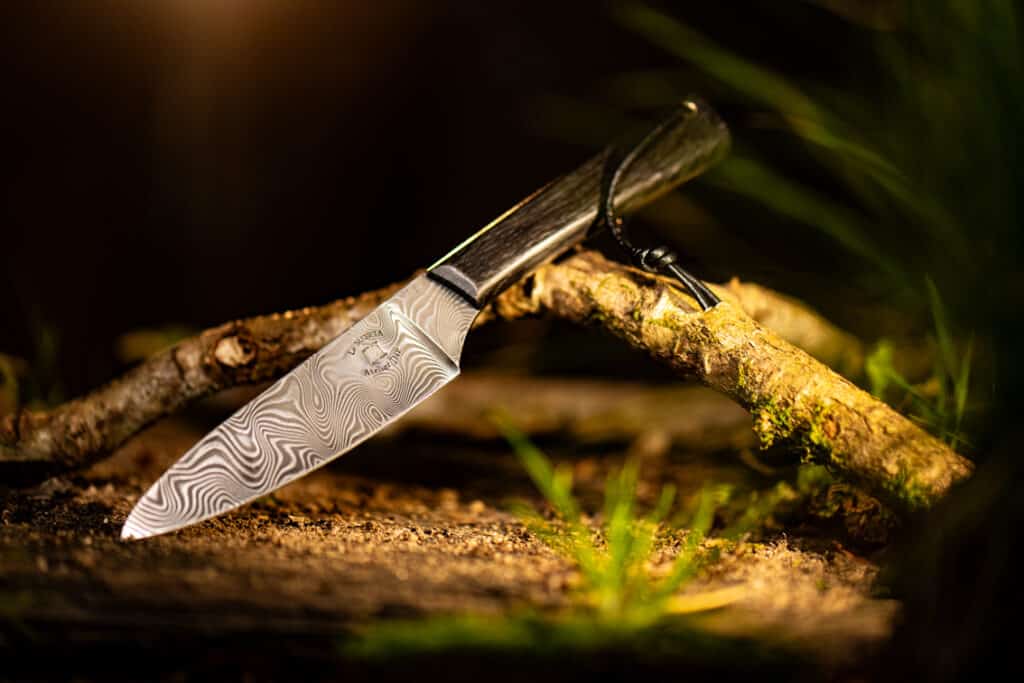
Firstly, the process of making Damascus steel is significantly more complex and refined than that of ordinary steels.
Indeed, this process involves not only the meticulous selection of different types of steel but also their combination and forging to create the distinctive patterns of Damascus steel.
This manufacturing method requires a high level of skill and experience, often passed down through generations of artisans.
Furthermore, the quality and durability of Damascus steel are exceptional. Thanks to its unique composition and forging process, Damascus steel offers superior resistance and sharpness compared to ordinary steels. These characteristics translate into the longevity of the knife, meaning that Damascus steel knives maintain their performance and aesthetics for many years, even with regular use.
Additionally, Damascus steel is appreciated for its unique aesthetic. The rippling patterns and distinctive designs of each blade make it not only an effective cutting tool but also a work of art. This aesthetic beauty, combined with functional performance, makes Damascus steel particularly prized by connoisseurs and collectors.
Finally, the production of Damascus steel is often less industrialized and more oriented towards craftsmanship, which limits the quantity available on the market. This exclusivity also contributes to its higher cost.
Find Damascus steel at Couteaux Morta
We are proud of our collection of Damascus steel knives, a material that combines beauty and performance. Each knife is the result of a meticulous process, where the steel is folded and forged to create unique patterns. These patterns are not just aesthetic; they testify to the quality and strength of the knife.
Our Damascus steel knives are designed for those who appreciate exceptional craftsmanship. They are perfect for professional chefs, cooking enthusiasts, or simply for those looking for an everyday knife that stands out from the ordinary. Each piece reflects our commitment to excellence and the tradition of French cutlery.
Conclusion
In summary, Damascus steel, although more expensive, represents an excellent investment due to its superior quality, durability, and unique aesthetics. At Couteaux Morta, we are proud to offer Damascus steel knives that combine tradition, innovation, and artisanal excellence. We invite you to discover our collection and experience the difference a high-quality knife can make in your kitchen or daily life.
Why is Damascus steel more expensive than regular steel?
Damascus steel is more expensive due to its complex manufacturing process, which involves meticulous selection and combination of different types of steel, then forging to create distinctive patterns. This method requires a high level of skill often passed down through generations. Production is also less industrialized and more craft-oriented, limiting the quantity available.
What makes Damascus steel different from ordinary steel?
Damascus steel combines different steels through a meticulous forging process, offering superior durability, sharpness, and corrosion resistance. Ordinary steels are mass-produced using standardized methods from a single type of steel. Damascus steel also features unique rippling patterns that ordinary steels lack.
How is Damascus steel made?
It begins with selecting different types of steel, often a mix of high carbon steel and softer steel. These are layered, heated, and forged together, then folded and reforged multiple times. This process creates the characteristic patterns, making each piece unique.
How does Couteaux Morta make its Damascus knives?
The process uses powder metallurgy, mixing different types of steel powder compressed under high pressure to form a solid block. This block is heated to merge the powders and create distinctive patterns. Each blade undergoes meticulous manual sharpening, and the handle incorporates Morta, a unique fossilized wood.
Is a Damascus steel knife a good investment?
Yes, Damascus steel knives maintain their performance and aesthetics for many years with regular use, thanks to superior resistance and sharpness. Each blade is also a work of art prized by connoisseurs and collectors, combining functional performance with aesthetic beauty.
Share on social networks