

Some objects are more symbolic than others. Why? Because they carry a story, that of hundreds of generations. Each civilization integrates its tradition into them. The knife falls into this category of emotional, cultural, and heritage representation. Between strength, honor, and power, the sharpness of blades leaves no people indifferent. The Japanese associate it with the samurai’s sense of duty. Vikings see it as a mark of trust. At Couteaux Morta, we see it as emotion. The emotion of combining historic millennial wood with French craftsmanship. Precision and good humor, crafted into a culinary weapon. The symbolism of the knife spans all times: past and present. Here’s the proof!
📌 Key Takeaways: A Blade, a Knife – A Powerful Symbol!
- Viking blade traditions: Vikings exchanged knives to mark alliances and trust, with blades passed down as heirlooms featuring runic futhark letters and Norse mythology motifs on iron, steel, and bronze.
- Samurai heritage in kitchen knives: When a 19th-century law prohibited saber-carrying, Japanese blacksmiths applied katana forging techniques to kitchen knives – giving rise to the renowned Santoku.
- 5,000-year-old Morta handles: Brière oak fossilized by geological upheaval, preserved in peat creating distinctive ebony coloring with caramel reflections, regulated by the Syndical Commission of Grande Brière Mottière.
- The coin tradition: The superstition against gifting knives is neutralized by requesting a coin as payment, converting the gift into a transaction and preserving the relationship.
- Michelin-starred endorsement: Chef Éric Guérin of La Mare aux Oiseaux restaurant uses Morta knives professionally, with exclusive micro-artwork by painter Nicolas Peyron from La Baule.
The viking knife: A symbol of trust
For Vikings, the knife serves as much as a daily tool or hunting knife as a defense weapon (they assert 😉 aboard their drakkar en route to England). To give a knife as a gift is to express one’s consideration for the other. The giver of the knife shows trust in the other’s ability to use it with honor. Tradition dictated that alliances be marked by the gift of a knife. These knives would even be passed down from generation to generation as precious objects.
Viking knives are often decorated with animals, runes (letters from the runic alphabet or futhark), or gods from Norse mythology (like Loki or Thor). Did Marvel have a penchant for Viking culture? Their blades are made from iron, steel, or bronze.
The most symbolic weapons remain the axe, the sword (Ulfberht), the bow, the spear, and finally the Seax: the curved blade knife.
Harald Fairhair (850 – 932) is one of the first famous Viking kings. His nickname came from his refusal to cut his hair until he was the sole ruler of Norway. History does not tell if he eventually styled it with an axe or knife.
I prove my friendship and trust with a Morta Knife, famous for massacring stubborn sausages and cheeses.
I visit the shop: folding knives, fixed knives.
-

Compact fixed knife as forged
180,00 € This product has multiple variants. The options may be chosen on the product page -
Solid Morta as forged
245,00 € This product has multiple variants. The options may be chosen on the product page -
Solid Morta Damascus
425,00 € This product has multiple variants. The options may be chosen on the product page
The Japanese knife: The reflection of honor
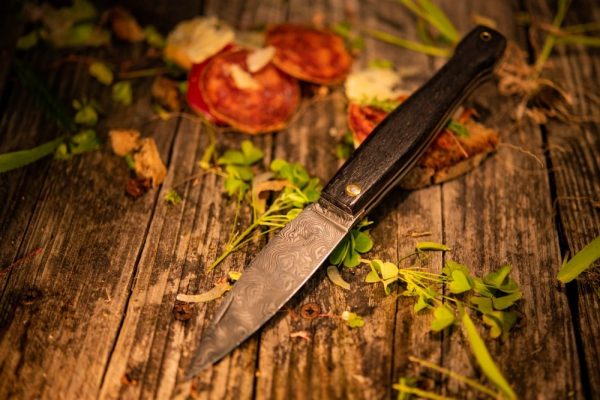
Katana, does that ring a bell? These are the swords of Japanese samurai, these valiant warriors, symbols of Japanese culture. Appearing in the 10th century, they gained full power 200 years later and passed their title from father to son. These gentlemen are recognized for their acute sense of ethics, duty, and devotion to their master: the daimyo or shogun. Over time, especially with the pacification of the Edo period, they lost power and became more symbolic. Their emblem, the cherry blossom, symbolizes the thin thread on which their life hangs.
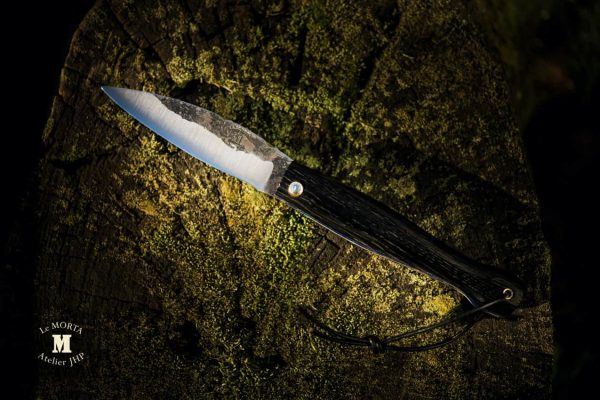
But back to our knives. As in most civilizations, the Japanese knife represents strength and power. Of course, it’s the honor of the samurai warriors that we find in these sharp blades. In the 19th century, a law prohibited the carrying of sabers. Japanese blacksmiths then applied their technique to kitchen knives. It’s worth noting that the culinary arts are also highly regarded in the land of the rising sun.
The sharpness of Japanese blades reminds us of our capacity to delve deep. To cut also symbolizes to dismiss daily troubles.
I prefer a Morta table knife to perform Hara Kiri (or seppuku) on my sushi.
😉 Did you know?
In Japanese, the term “samurai,” derived from the word “bushi,” means warrior.
Nowadays, the most famous is the Santoku (multi-purpose knife, different from the Swiss knife).
The symbolism of the Morta Knife: The emotion of Heritage
Yes, indeed. We could not decently publish this article without mentioning the symbolism of this French knife with a unique and age-old history.
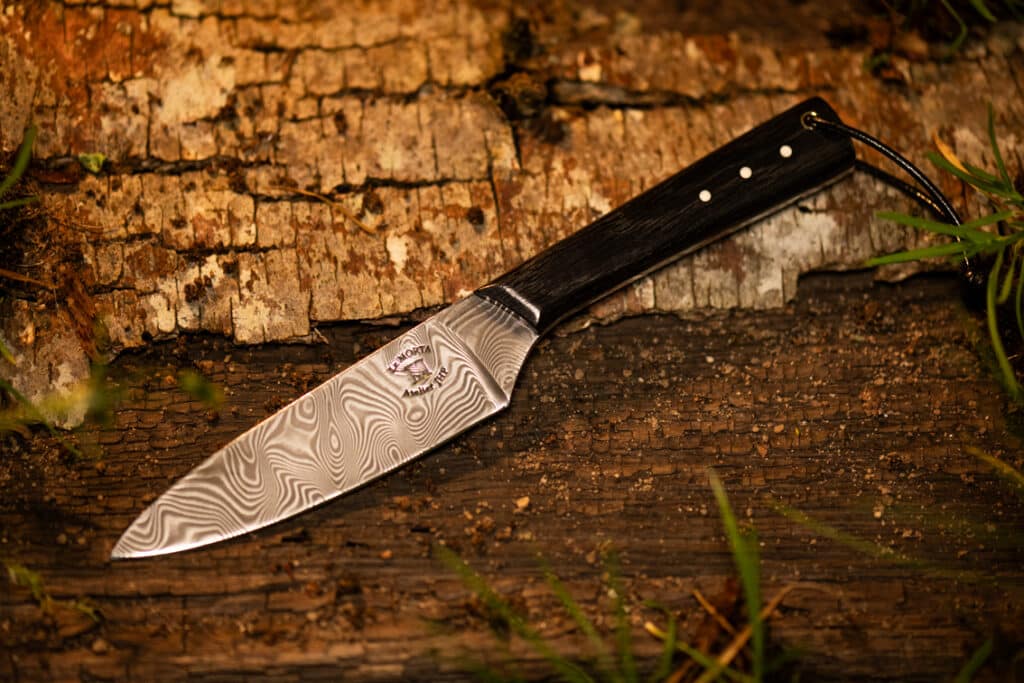
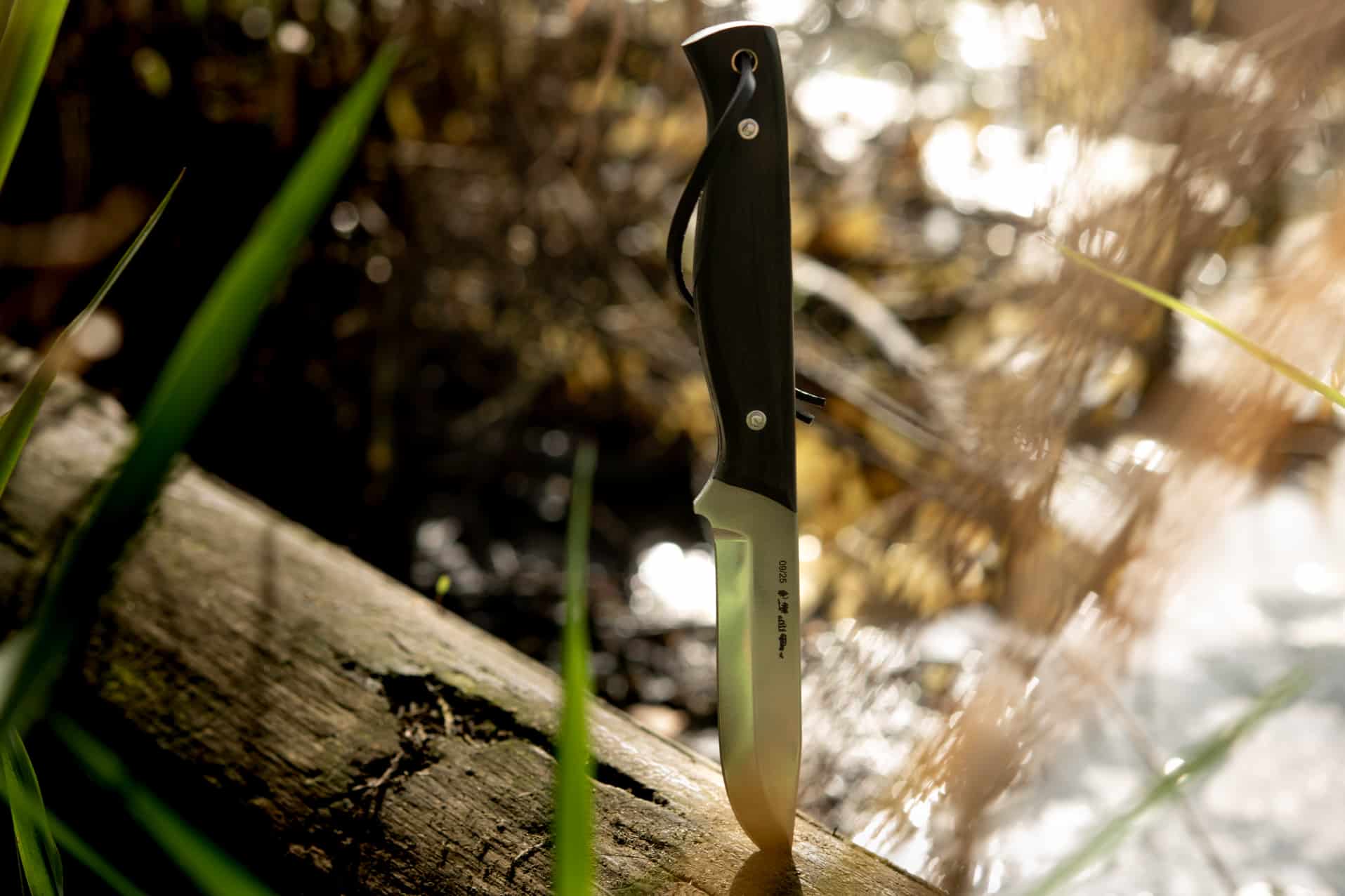
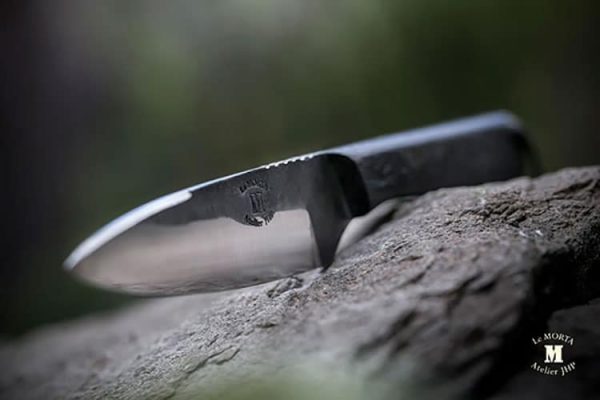
A handle made of millennial wood
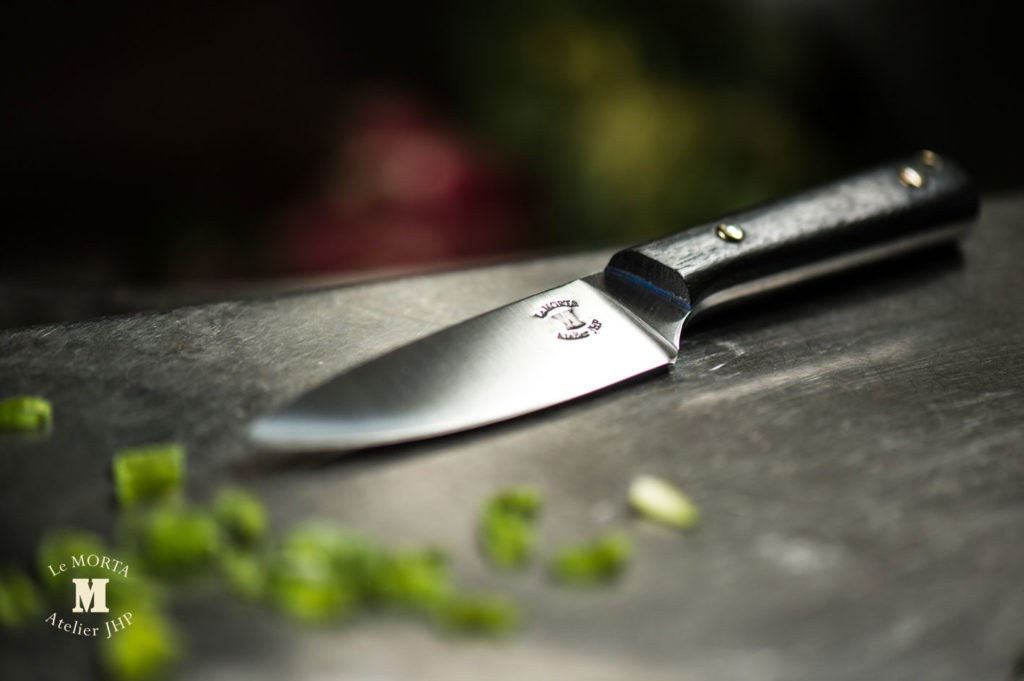
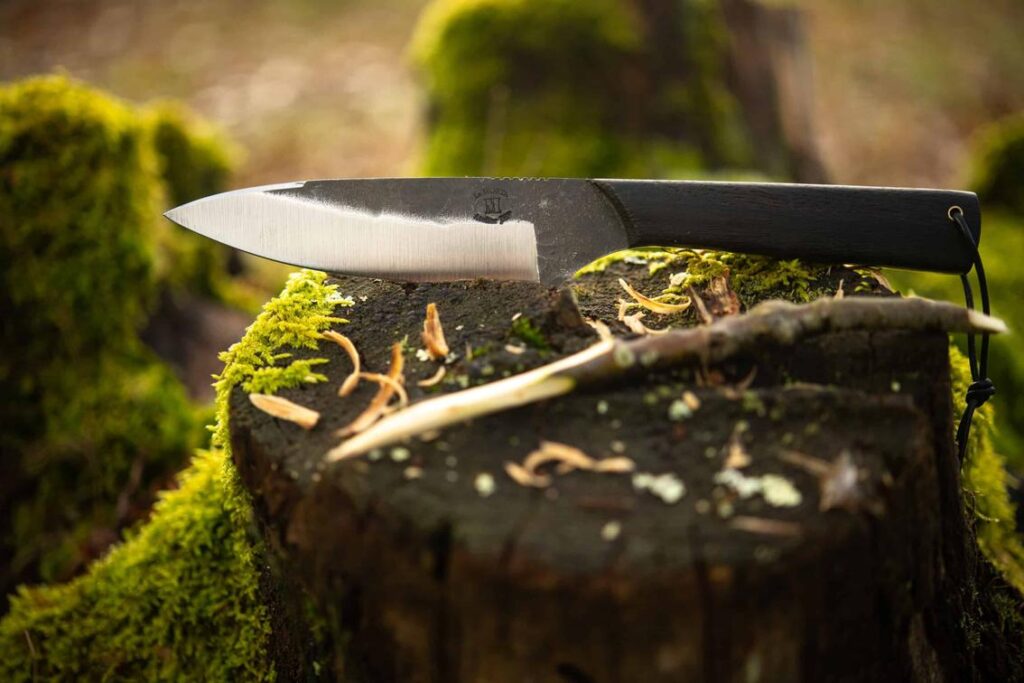
Its handle is made from Brière oak, buried by a geological upheaval 5,000 years ago. The peat then served as a natural sarcophagus. By depriving it of air, it offered it extraordinary preservation.
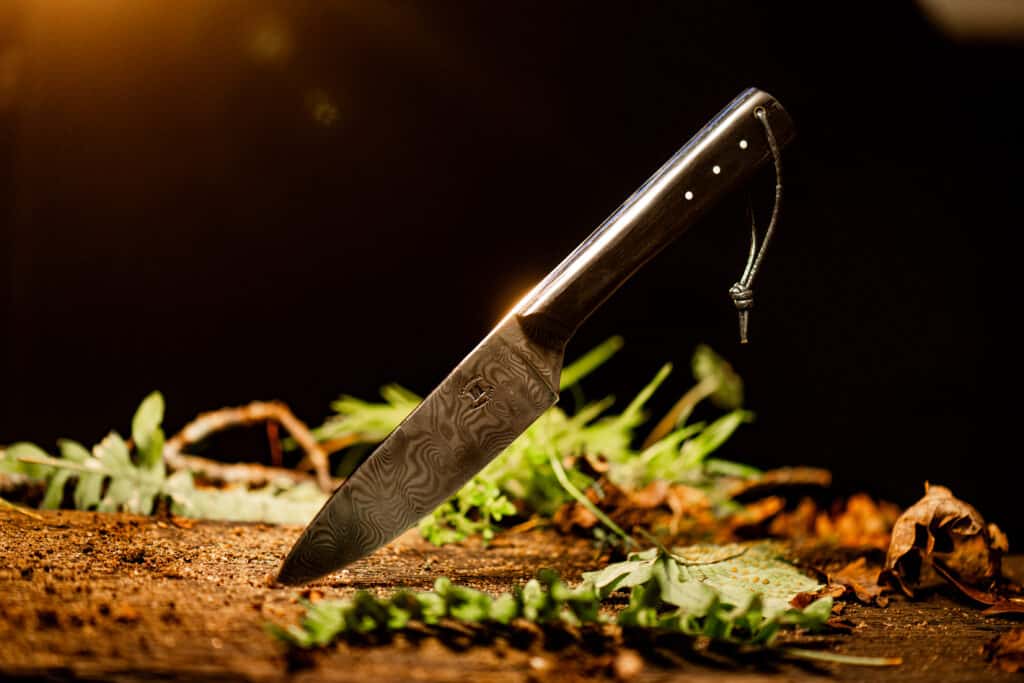
Today, it is still fossilizing. The black peat also gives it its unique and exceptional color of ebony with some caramel reflections.
The team of cutlers themselves digs up the Morta trunks. This extraction is strictly regulated by an agreement signed with the Syndical Commission of Grande Brière Mottière, in accordance with the Brière Regional Nature Park.
A protocol specifies the geographical area, season, and extraction conditions in an environmentally respectful policy. Thus, the method remains artisanal, the terrain is restored, and no heavy vehicle is allowed to enter.
Giving a Morta knife is like placing 5,000 years in the recipient’s pocket. What do you think?
A french artisanal knife filled with emotion
The Morta knife is also the symbol of a job well done. If the extraction is physically very hard and sporty, the making of the knife is all the more valued. Each cutler deposits his or her expertise with precision, rigor, and always in good humor. Each creation evokes the same feeling of pride and happiness. Feelings that the happy owner finds when receiving his knife. The emotion intensifies as the wood is patinated in the palm of his hand.
This French-made knife also represents cultural heritage. Indeed, the painter from La Baule, Nicolas Peyron, draws exclusive micro-artworks for the customization of Morta knives.
I offer a personalized knife.
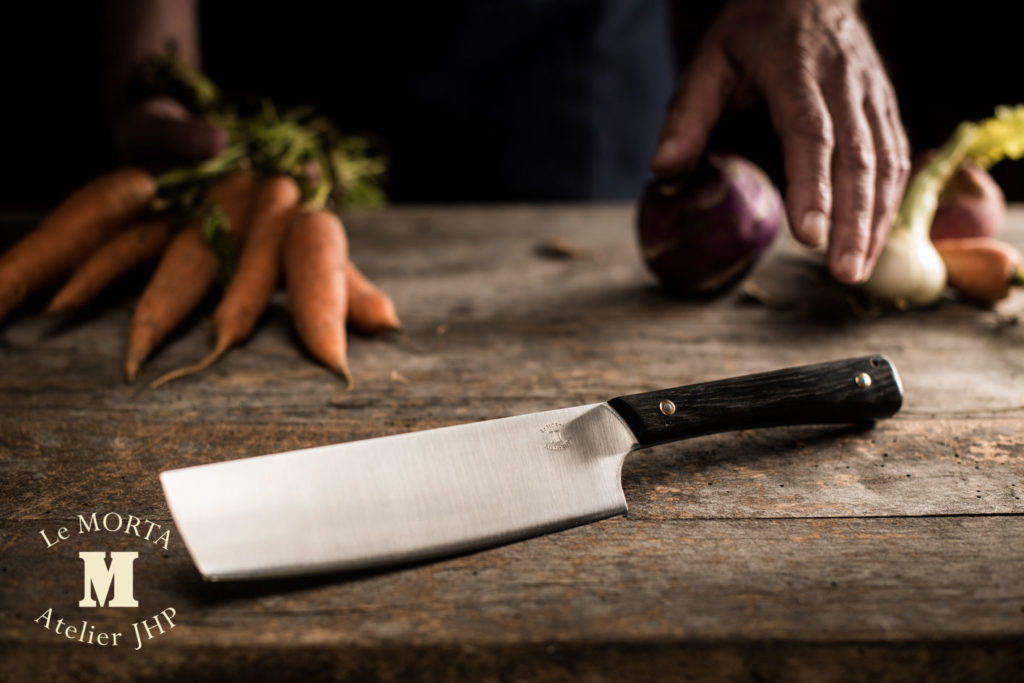
Culinary art is not left out since the Michelin-starred chef Éric Guérin slices his sea bass fillets with Morta knives in his Brière kitchen at his restaurant La Mare aux Oiseaux.
Giving a knife: What does it mean today?
The knife, a messenger
In France, the tradition persists. The knife represents power and strength. Receiving it under the Christmas tree or on one’s birthday is a cultural pleasure.
A man sees in the blade the reflection of the position of head of the family.
A woman who is given a knife sees it as a modern consideration, worthy of a society where gender equality must be respected.
The knife is also given to young communicants who symbolically come of age. It then reminds them of virility and autonomy. An indispensable multi-purpose object for scouts.
What knife to offer?
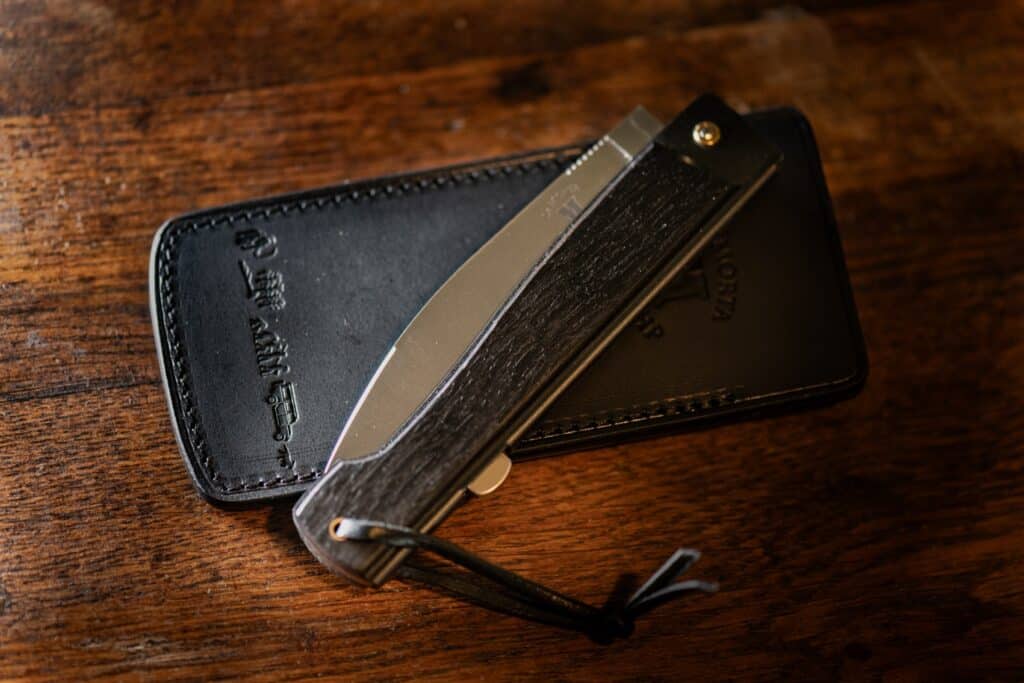
In this case, we like to offer a quality kitchen knife to gourmets or budding chefs (or not). Adventurers and explorers, on the other hand, receive the traditional folding knife, practical to slip into the pocket on any excursion (fishing, hunting, or gathering). It’s worth noting that here we find the primitive activities of our prehistoric ancestors, inventors of the flint, stone, bone, or obsidian knife.
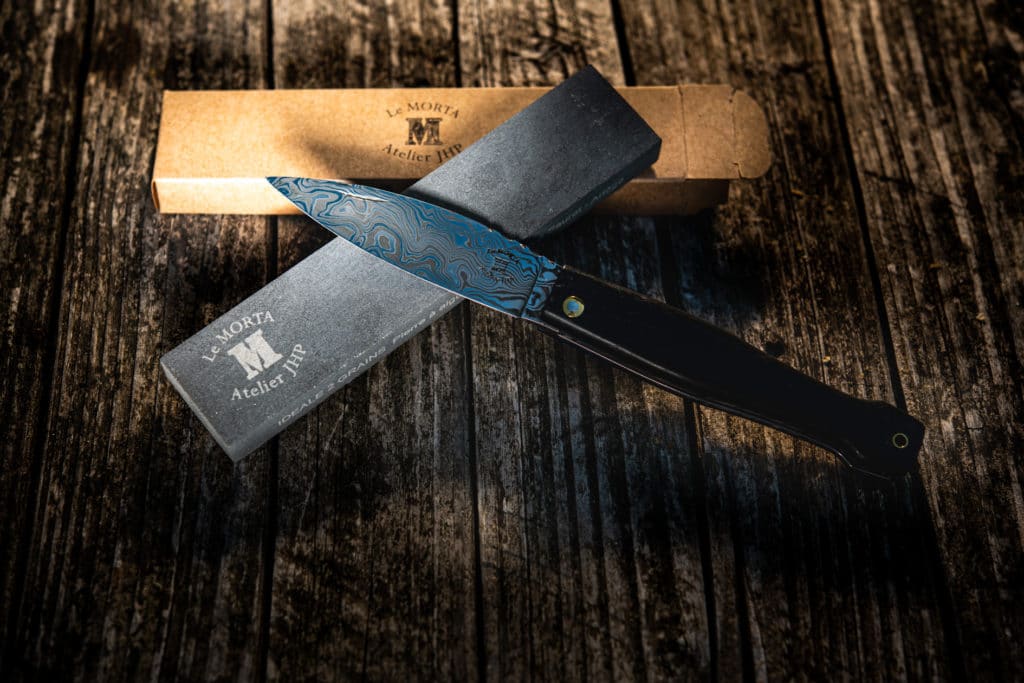
Table knives delight hosts and hostesses who love beautiful tableware and wish to amaze their guests.
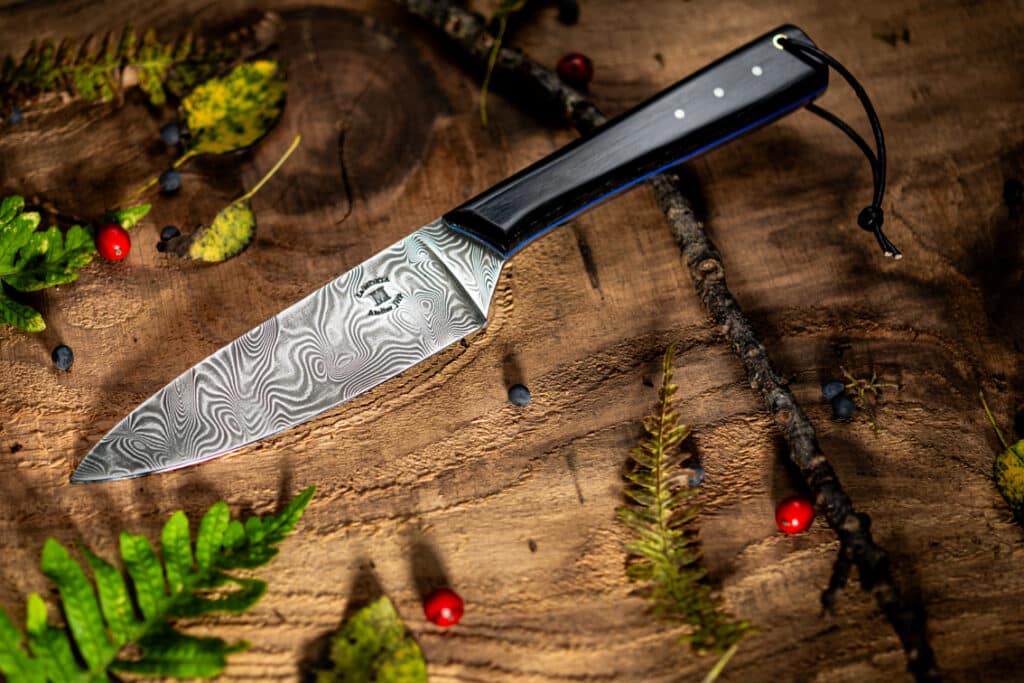
Art lovers appreciate Damascus blades for their exceptional curved designs.
Personalizing the knife makes it ideal to show the recipient that they
are unique in our eyes. The knife then becomes a passionate messenger on Valentine’s Day. It proves filial love on Father’s and Mother’s Day and remains universal at Christmas.
Elders, on the other hand, do not need a pretext to pass their knife on to the next generations. The famous grandfather’s knife holds a special place in people’s hearts.
Having trouble choosing? The “Prestige” table knives presented in their box have a very clear opinion on the matter.
Does giving a knife bring bad luck?
Reasons for this superstition
Nowadays, the collective conscience retains a certain fear of giving a knife. Many even ask for a coin in exchange. Why?
Several reasons for this common belief.
🔪 As we have seen, the knife carries power and strength. Giving one could therefore imply that the recipient could not afford it, which would call their honor into question.
🔪 Some feared transmitting and losing their own power by offering a knife.
🔪 Others were concerned about cutting the bond that united them. Friendship bond, love bond, none would withstand the edge of a sharp blade, it was thought.
🔪 Finally, the possible use of the gifted knife as a weapon frightened the last.
The miracle antidote
Never mind, a magical antidote quashes all fetishist beliefs. You said give? Well, now sell! Just ask for a coin in exchange for the famous knife, and that’s it. No more question of a gift, you sell the knife, you cancel the curse.
All this having only symbolic value, no need to ruin the owner, a coin is a coin and the smallest of them is enough for the task. The main thing is to perpetuate the tradition.
In Summary
Traditionally, the symbolism of the knife remains power, strength, and honor. Psychoanalysis links it to violence, precision, and masculinity. Hunting, fishing, small chores, and cooking remain the modern domains where the knife proves indispensable. Anyway, the harmonious union of blade and handle, as well as the quality of its edge, represent the main criteria for choosing for cutlery enthusiasts. Adding a hint (euphemism, let’s be clear 😉) of history, a touch of craftsmanship, and a tear of art will make your personalized knife absolutely unique and unforgettable.
On your marks, get ready, slice!
Article written by the sharp pen of Christelle Lorant ✒️.
Why did Vikings give knives as gifts?
For Vikings, giving a knife as a gift was a powerful expression of trust and consideration towards the recipient. These knives, often decorated with animals, runes and Norse mythology figures, marked alliances between individuals and were passed down through generations as treasured family items.
How did the Japanese katana influence modern kitchen knives?
The katana, which appeared in the 10th century, symbolised the samurai’s ethics and sense of duty. When a 19th-century law prohibited carrying sabers, Japanese blacksmiths applied their traditional sword-making techniques to kitchen knives. This heritage lives on today in blades like the Santoku, the most famous modern Japanese kitchen knife.
What makes Morta wood unique for knife handles?
Morta knife handles are crafted from Briere oak that was buried for 5,000 years. The peat acted as a natural sarcophagus, preserving the wood by depriving it of air. This process gives the wood a unique ebony colour with caramel reflections, and extraction follows strict environmental protocols with the Briere Regional Nature Park.
What does giving a knife symbolise in French culture?
In France, a knife represents power and strength as a gift. For men, it reflects family leadership, while for women it symbolises modern consideration respecting gender equality. Young communicants receive knives as a symbol of coming of age, virility and autonomy.
Is it bad luck to give a knife as a gift?
Several superstitions surround knife-gifting, including fears of cutting emotional bonds or questioning the recipient’s honour. However, the traditional antidote is simple: ask for a coin in exchange for the knife. Even the smallest coin symbolically transforms the gift into a purchase, cancelling any supposed curse.
What customisation options exist for Morta knives?
Morta knives offer distinctive personalisation through the work of artisans like painter Nicolas Peyron, who creates exclusive micro-artworks for customisation. The handles are crafted from 5,000-year-old Briere oak with a unique ebony colour and caramel reflections, and renowned chef Eric Guerin uses Morta knives at his Michelin-starred restaurant La Mare aux Oiseaux.
Share on social networks