

From the forest to the forge: nature precedes man
The first things you notice are the trees, the oaks, the calm of the forest.
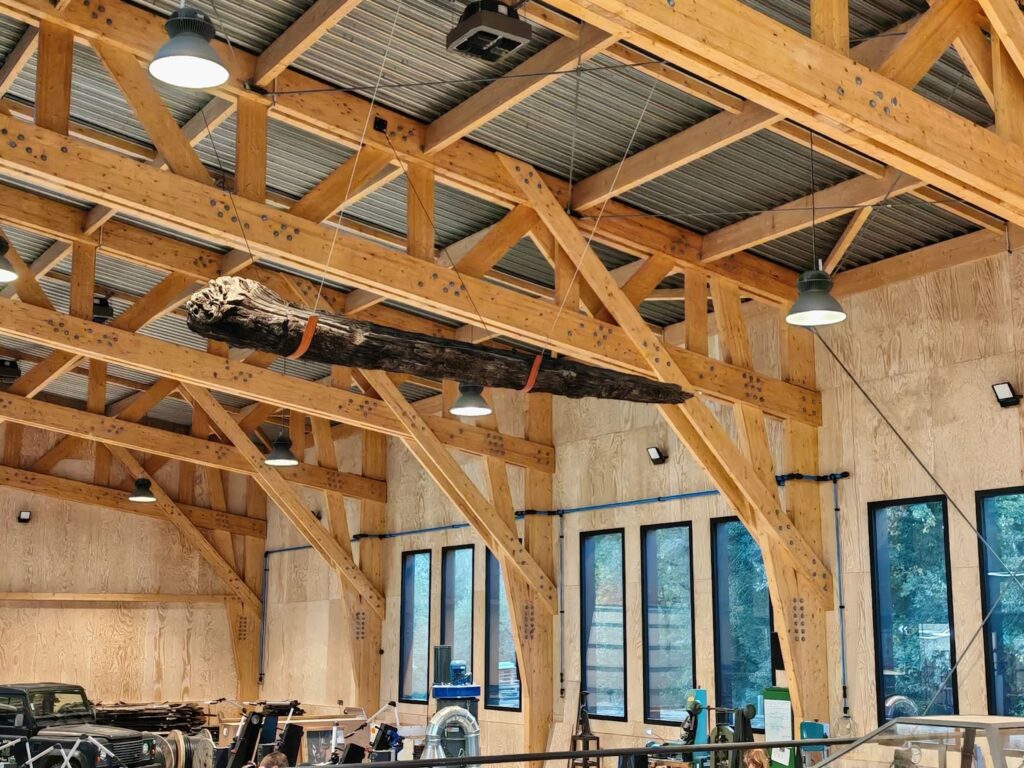
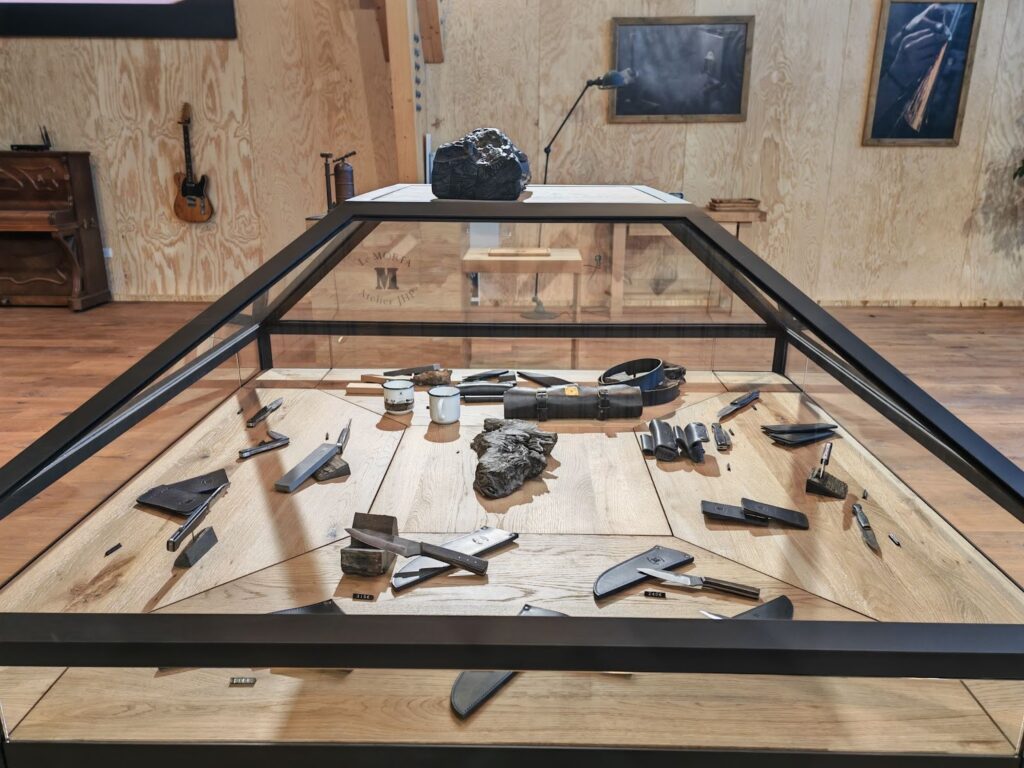
On Rue Augustin Fresnel in Saint-Nazaire, the new JHP workshop blends into the Briéron landscape. As soon as you walk through the door, you are greeted by a trunk of Morta wood. Majestic and imperturbable, it watches over the cutlery.
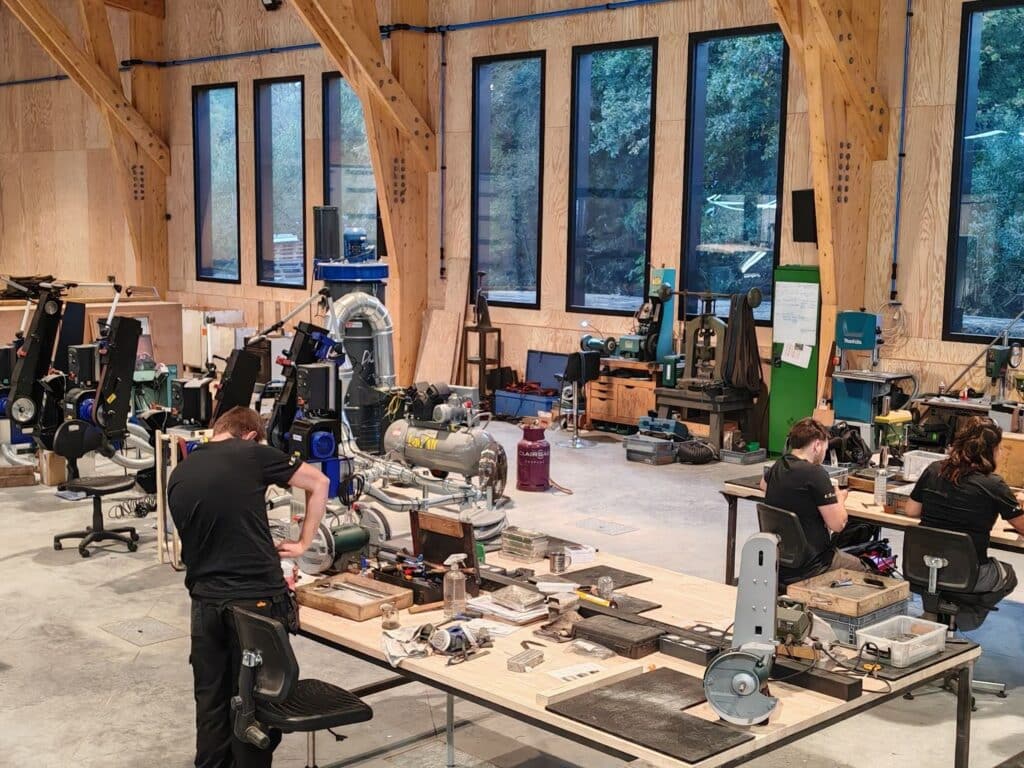
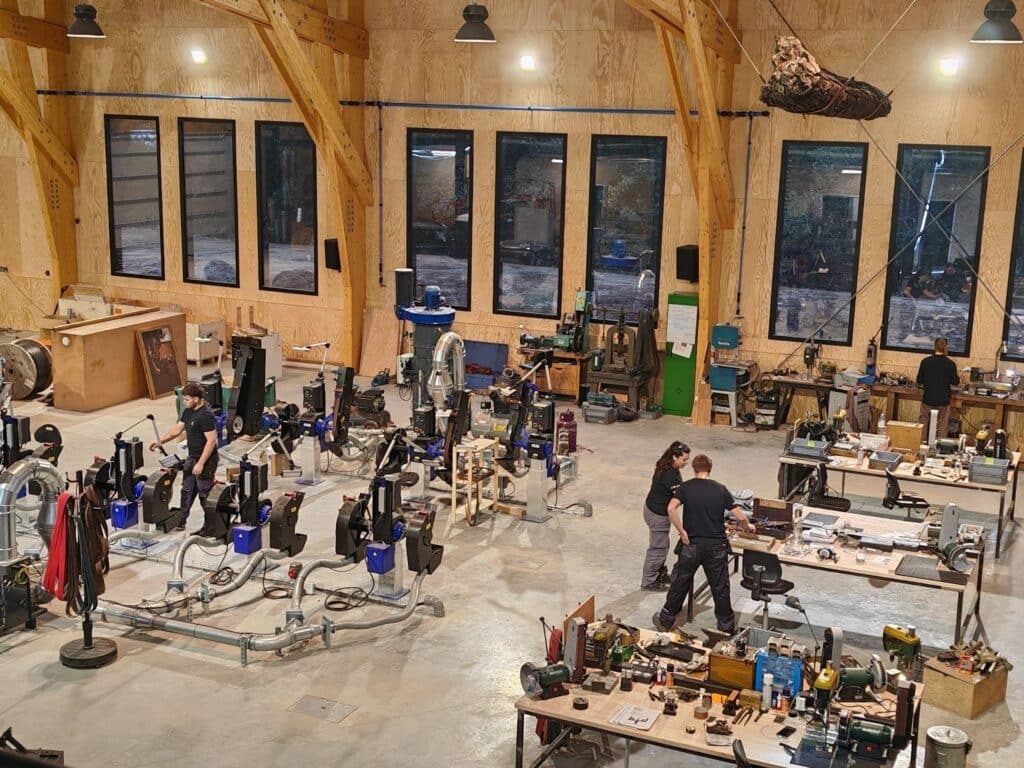
Immediately, a showroom invites you to stroll among the display cases, discover the extraction process on a large screen, or observe the silent (well, almost) ballet of the cutlers below.
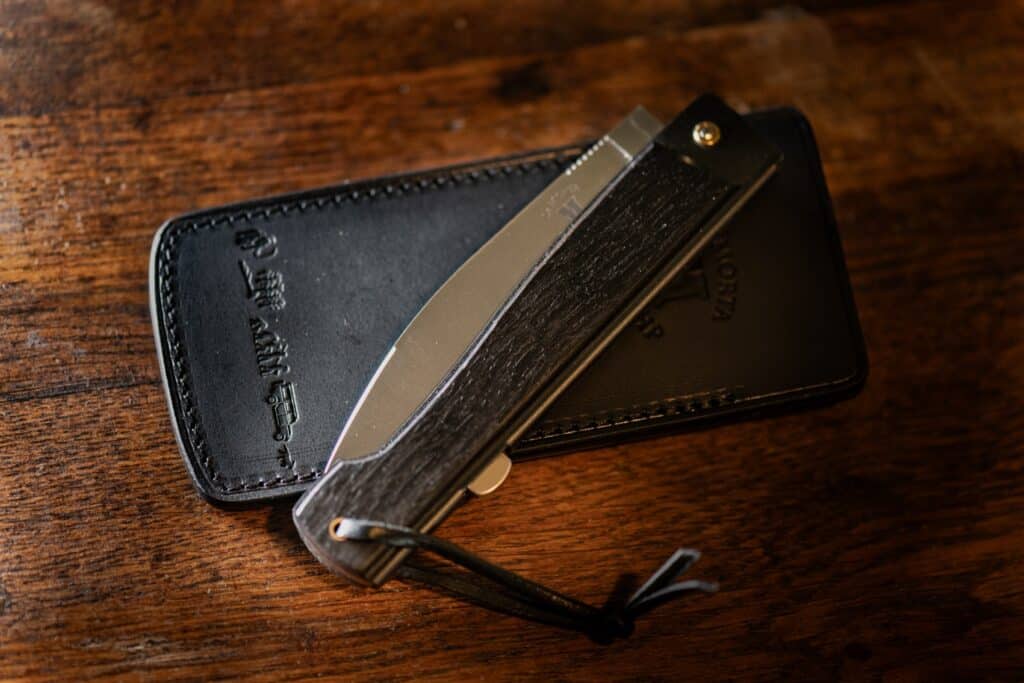
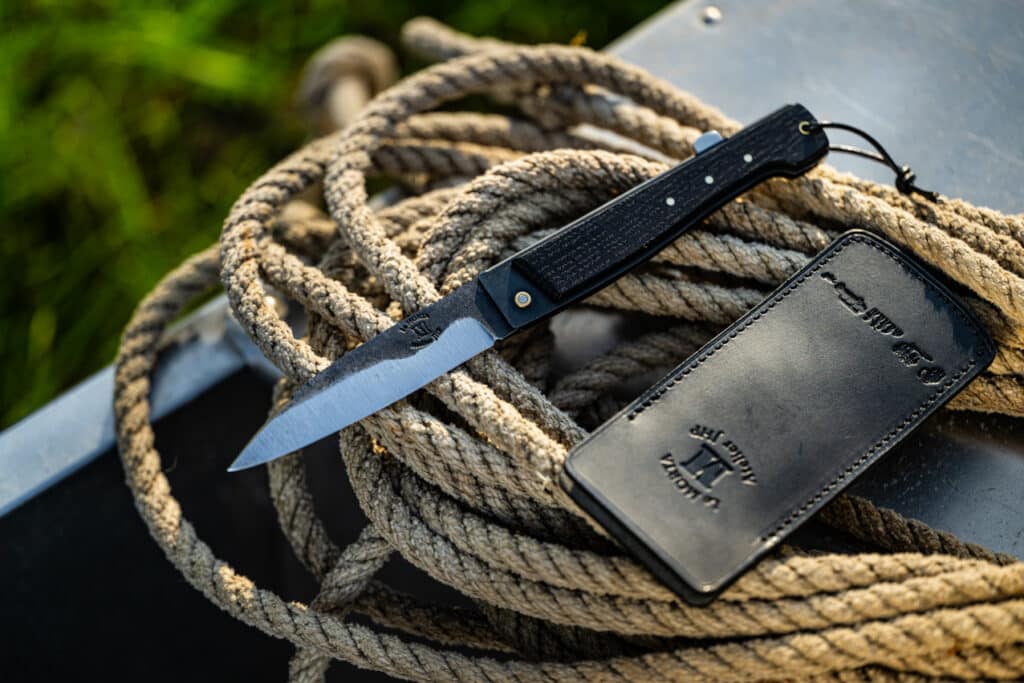
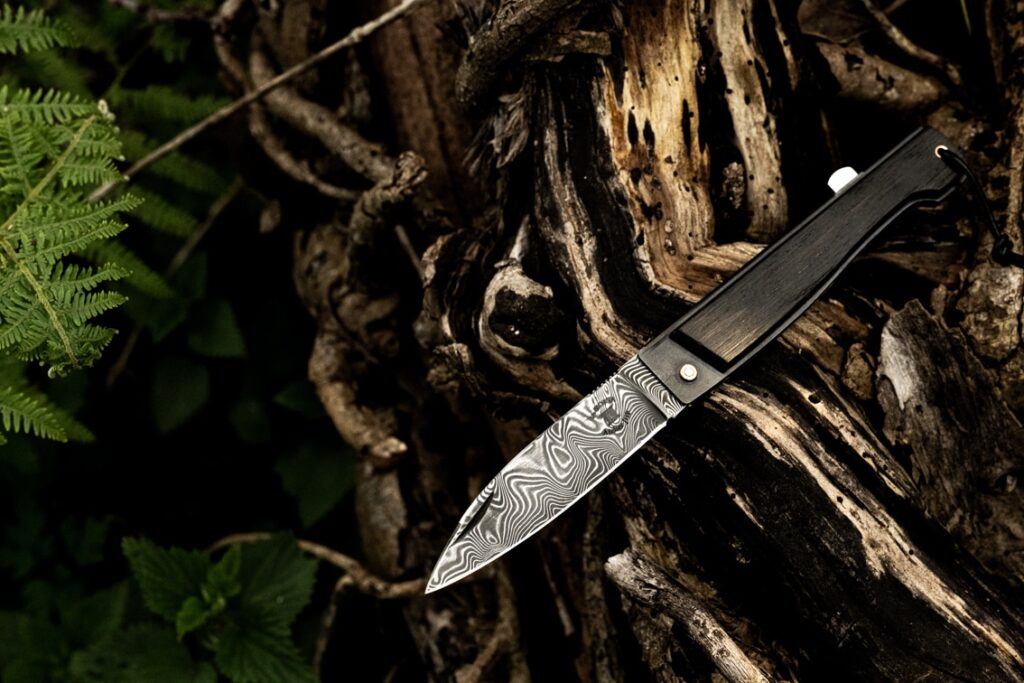
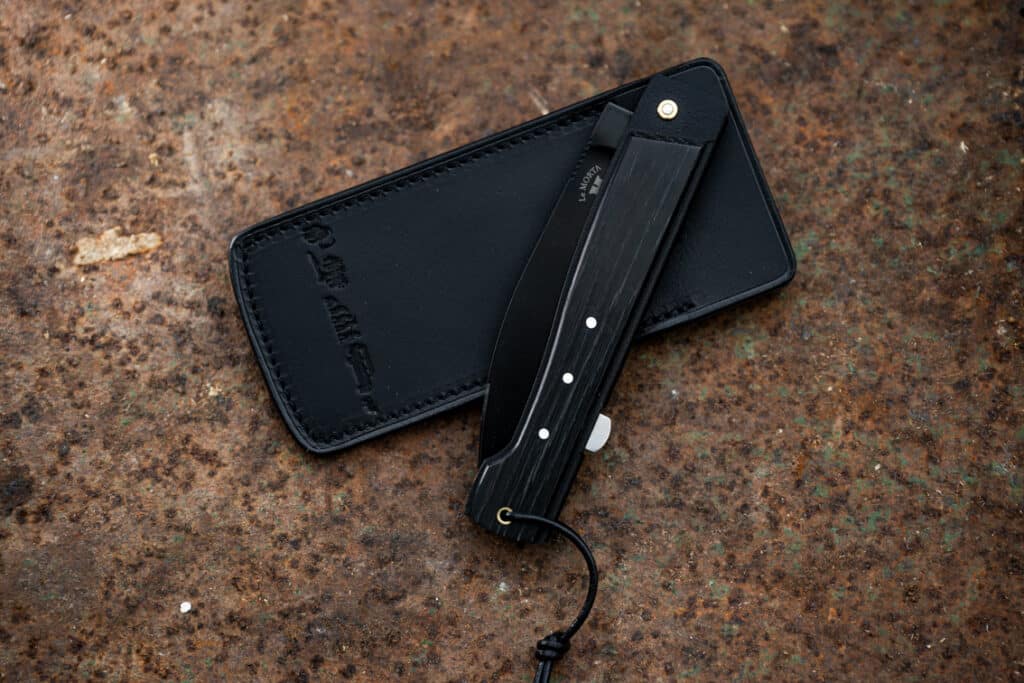
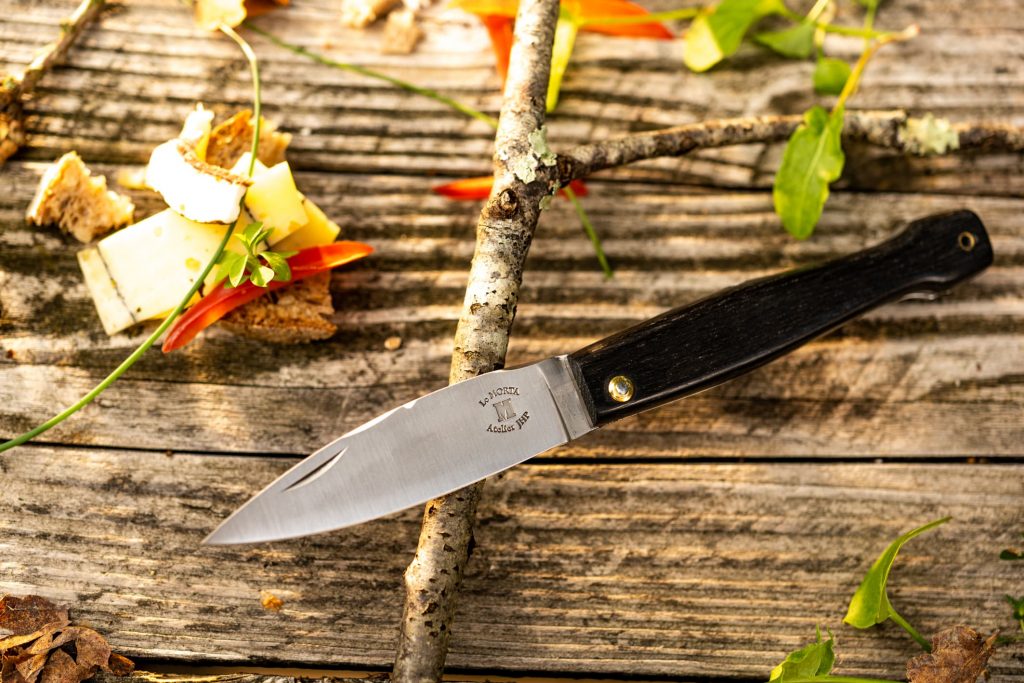
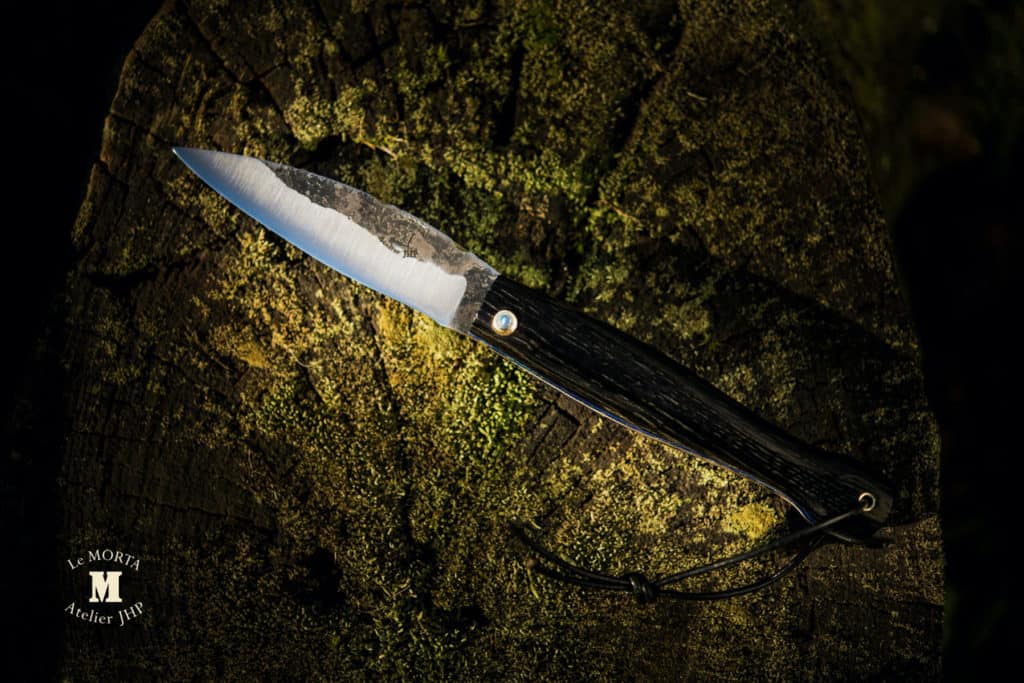
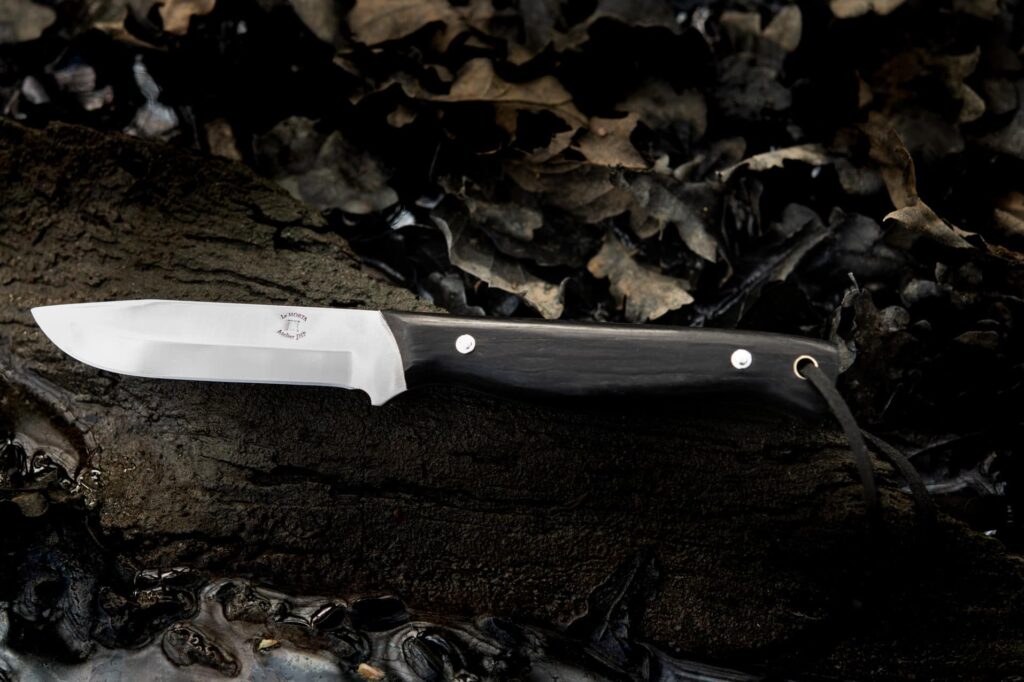
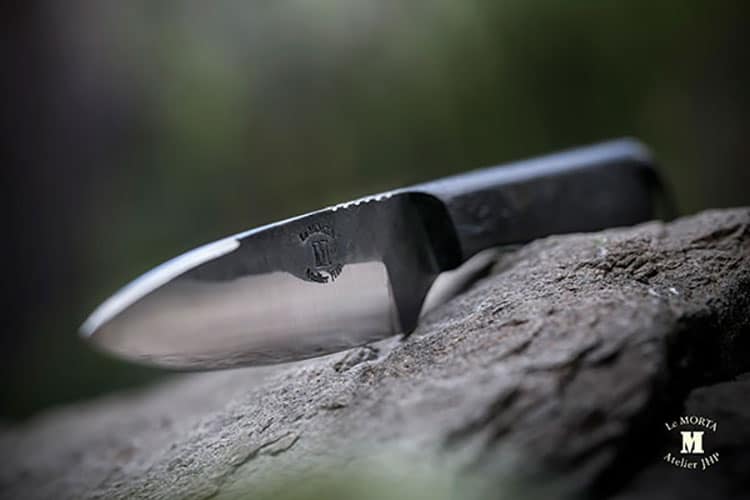
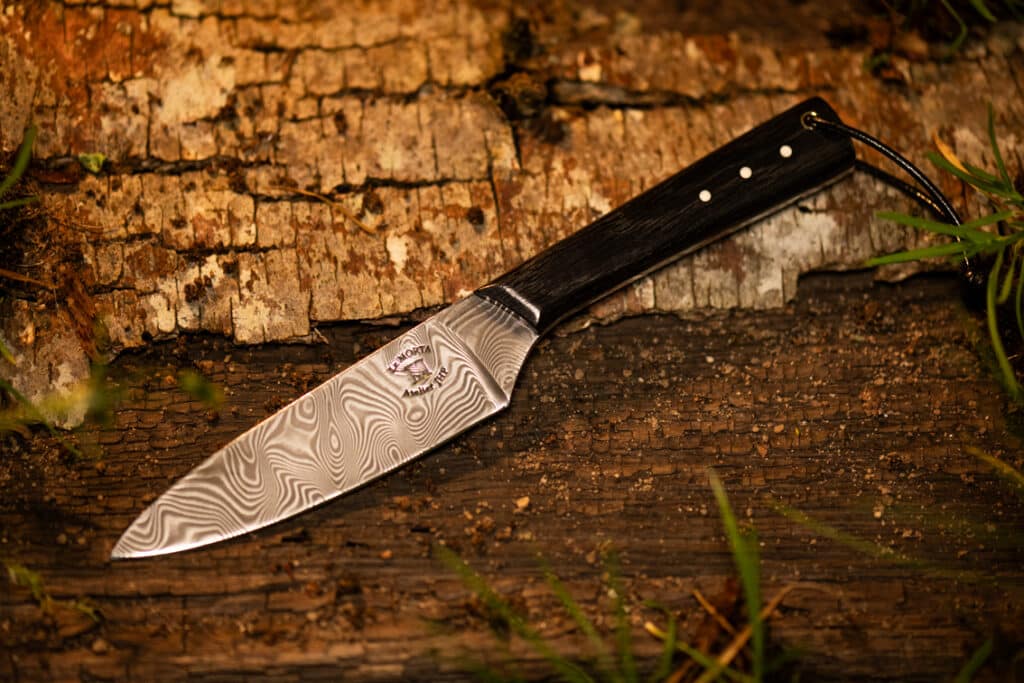
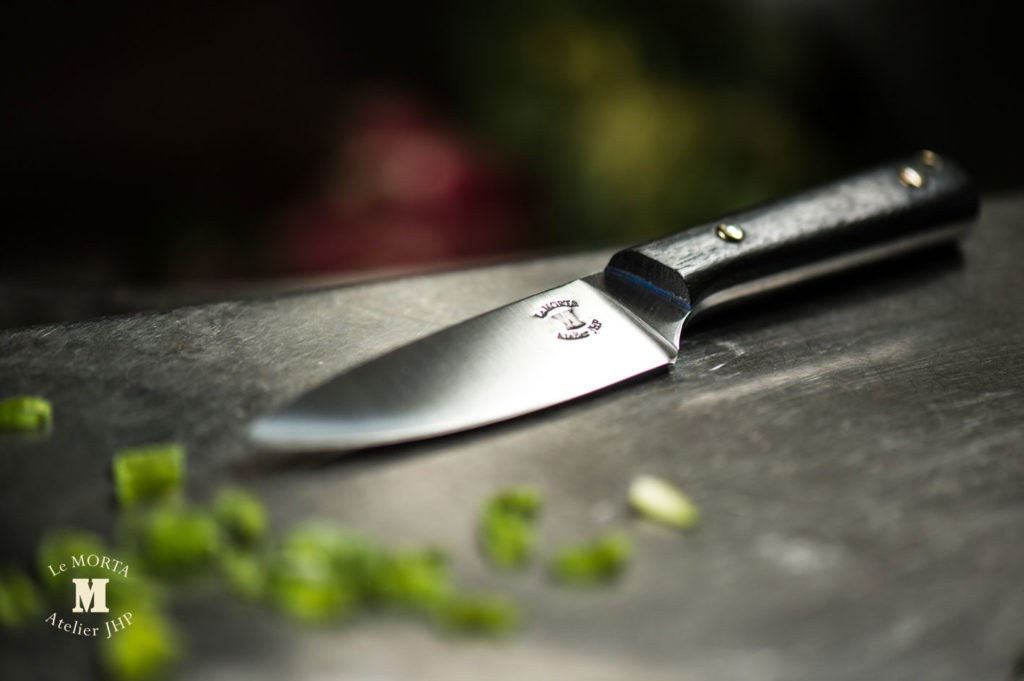
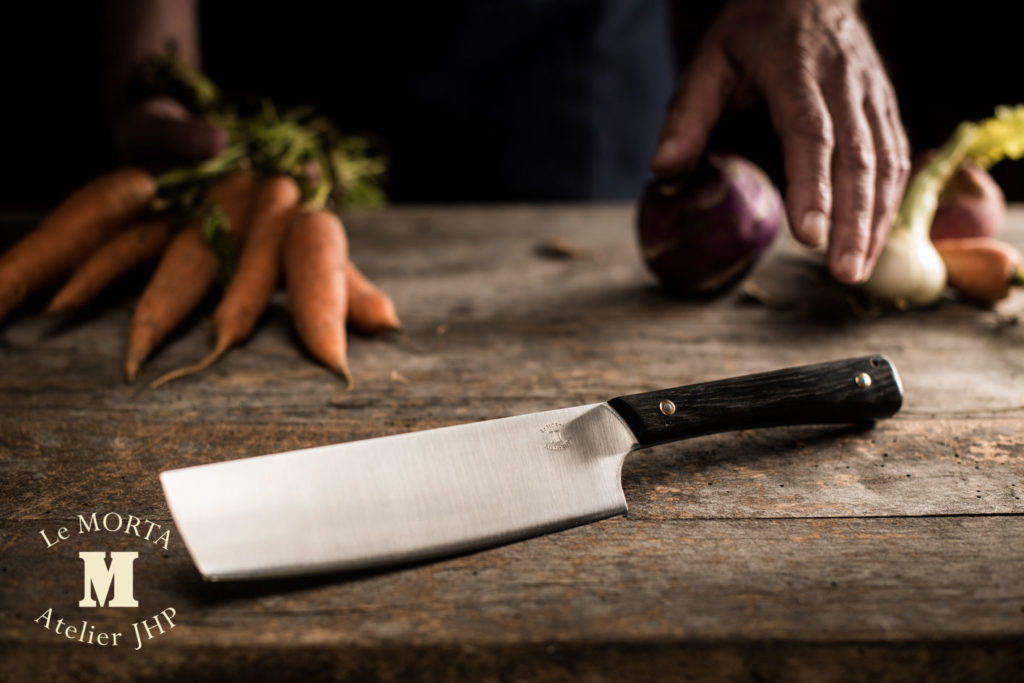
Morta rear pump, Paint It Black, Damascus chef’s knives, EDC, the knife models are lined up for your viewing pleasure. Your fingers tingle at the mere thought of touching the handle made from 5,000-year-old wood. In the middle, Alphonse de Châteaubriant’s novel La Brière discreetly recalls the company’s origins.
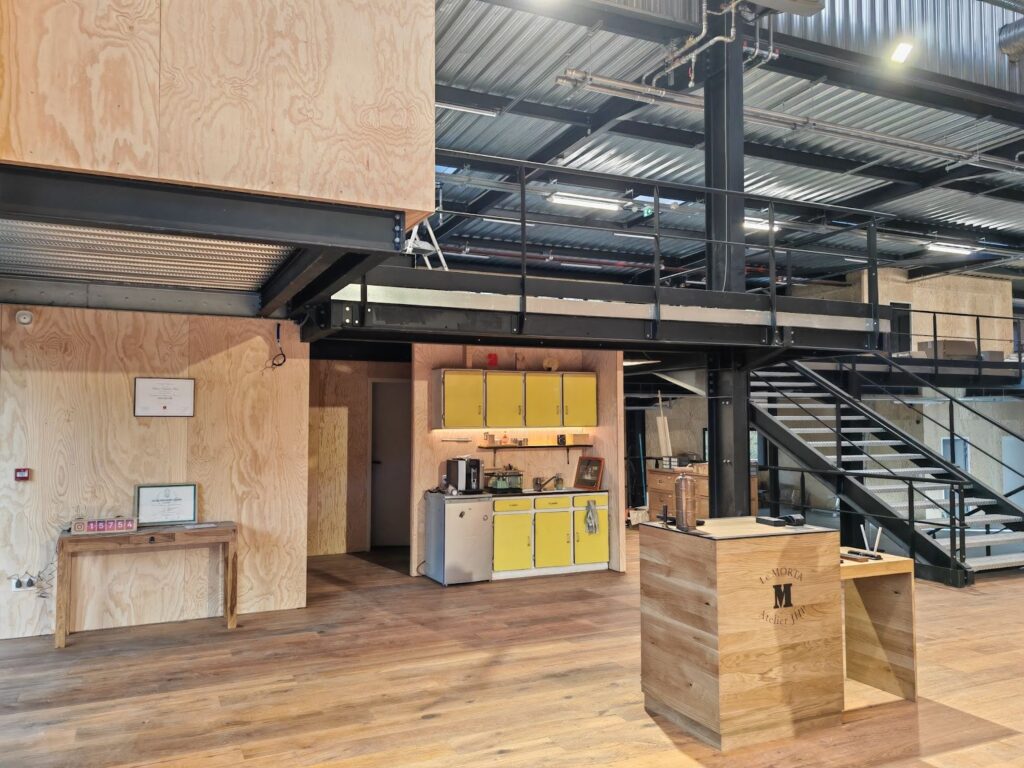
Between ancient wood and new forges, the JHP workshop is writing a new page in its history.
Here, everything breathes renewal. Four backstands (instead of two in the old building) and six double reels (also instead of two). Production, quality control, and shipping—each function has its place. In this hive of wood and metal, the cutlers give their all, sometimes kneeling on the floor because the chairs haven’t been delivered on time 😉.
The cutlery workshop is already running at full speed, even though the installation isn’t quite finished. The old forge awaits its new colleagues: a gas forge and a coal forge. A power hammer will complete the set and allow the cutlers to forge Damascus steel on site. To date, the JHP workshop mainly forges 90MCV8 steel for the production of the Brut de Forge collection.
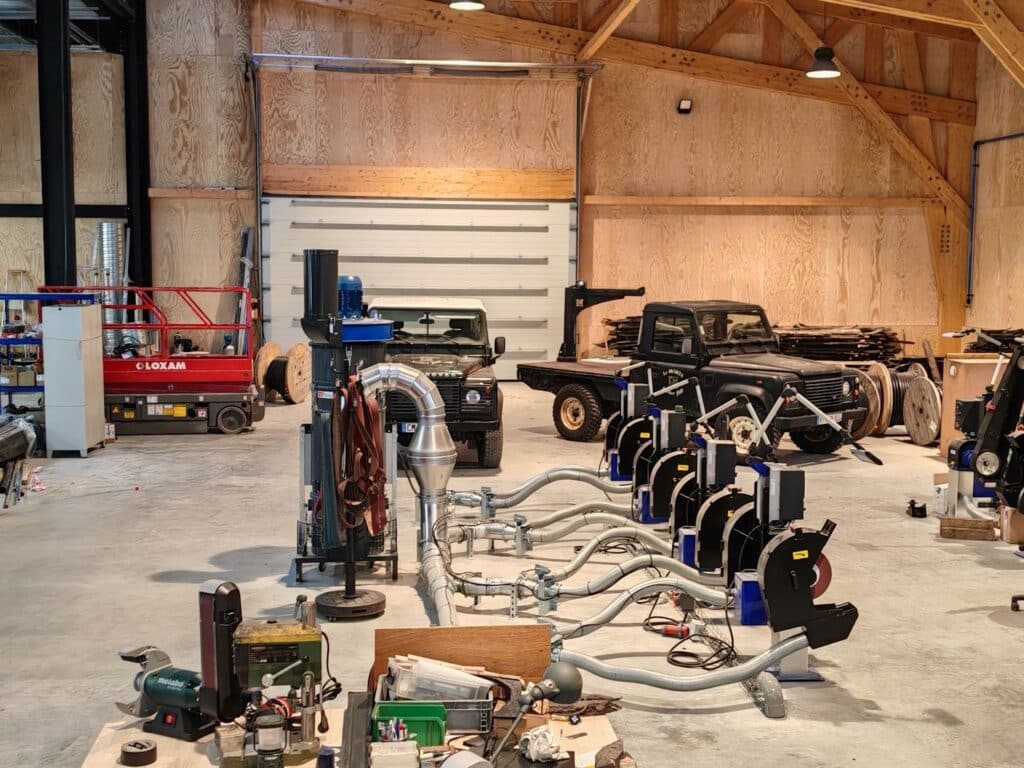
The volume and spaces are such that noise becomes a simple natural element, among the smell of raw parquet flooring and the organic decor where wood reigns supreme. The workshop smells new, full of passion and the promise of a long life.
Of course, the cutlers are still juggling power cuts, tidying up, and receiving deliveries. But that doesn’t matter, because visitors are flocking in, blades are being created, and handles are being shaped in a joyful renewal.
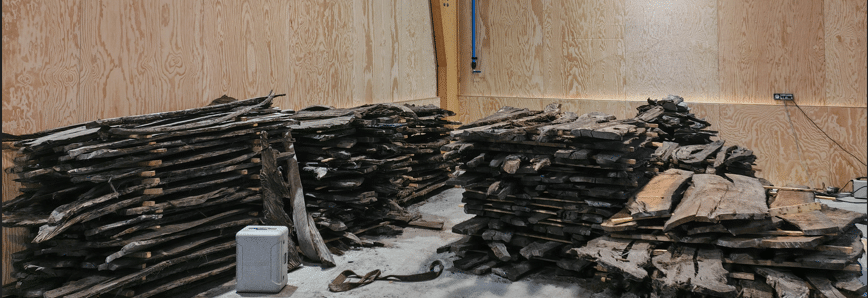
In the background, like a quiet sage, lies Morta’s first stockpile, enough to fuel nearly a year of production, or some six thousand knives. The rest is drying in a larger warehouse nearby. It should be noted that it takes about three years for wood extracted from the swamps to be usable.
You miss one person… you know the rest. One presence is still missing, that of Rio 🐶. Because yes, he is still the real boss 😅. But don’t worry, friends, Jean-Henri is getting everything ready for his arrival.
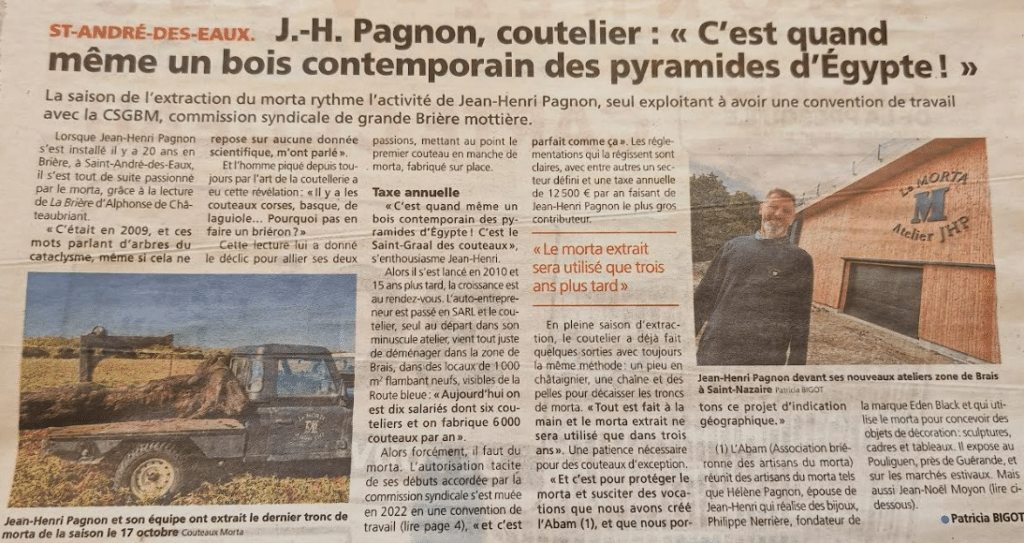
As Jean-Henri Pagnon, master artisan cutler, points out in the newspaper L’écho de la presqu’île, Morta wood is as old as the pyramids of Egypt. This oak from the marshes of Brière gives each knife its soul and uniqueness.
Do you really know Morta?
Morta is an oak tree from the Brière marshes that is in the process of fossilization. Buried in peat for 5,000 years, deprived of oxygen, it has fed on nutrients from the earth (silica, in particular) and has mineralized. Its ebony color, enhanced by caramel (or cognac) highlights, comes from its different layers.
Today, its extraction is strictly regulated. The Grande Brière Mottière Trade Union Commission, biodiversity services, and the Brière Regional Nature Park ensure that it respects the ecosystem and the development of fauna and flora. This is why the number of trunks extracted, their location, the manual method used, the period of extraction, and the restoration of the land are all criteria that are carefully monitored.
Discover how Morta is extracted.
The fight for Morta geographical indication
Did you know?
The word Morta comes from the Brière dialect. It therefore does not apply to all the swamp oaks found in the rest of France or in Eastern European countries such as Lithuania. Jean-Henri Pagnon has been working for several years to obtain territorial recognition for Morta. It has been a difficult journey, but the JHP workshop is not giving up (never gives up 😉).
In this new workshop, Morta is finding its breath again. But did it ever lose it? Between earth and patience, a whole territory continues to be forged.
The JHP cutlers await you in their new cocoon to pass on what Morta has taught them: patience, strength, and the beauty of the gesture. So, when are you coming?
Share on social networks