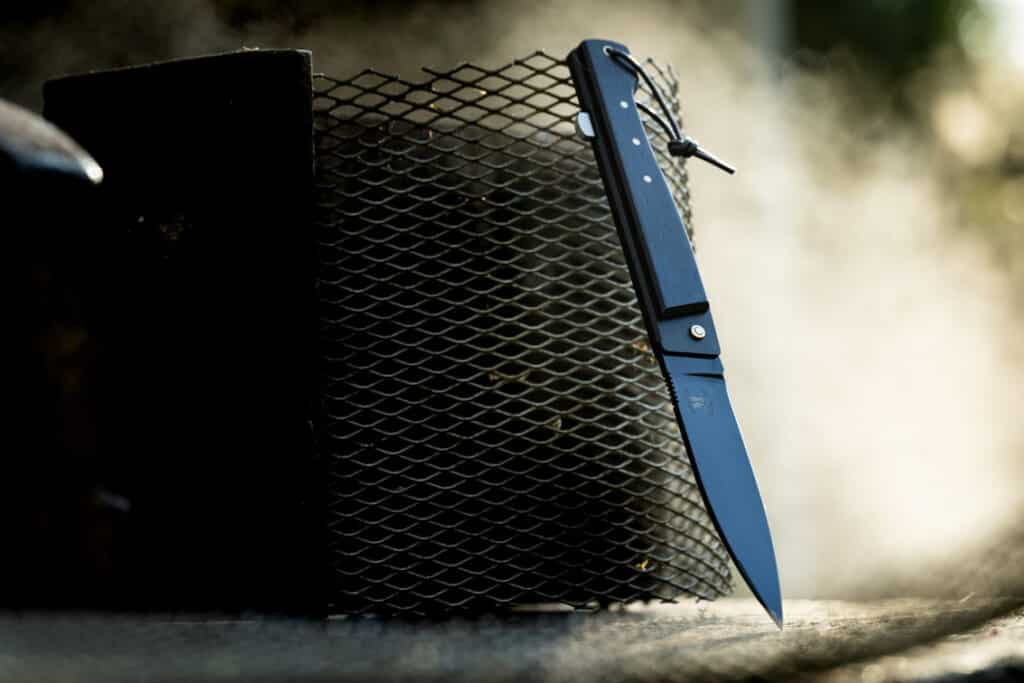

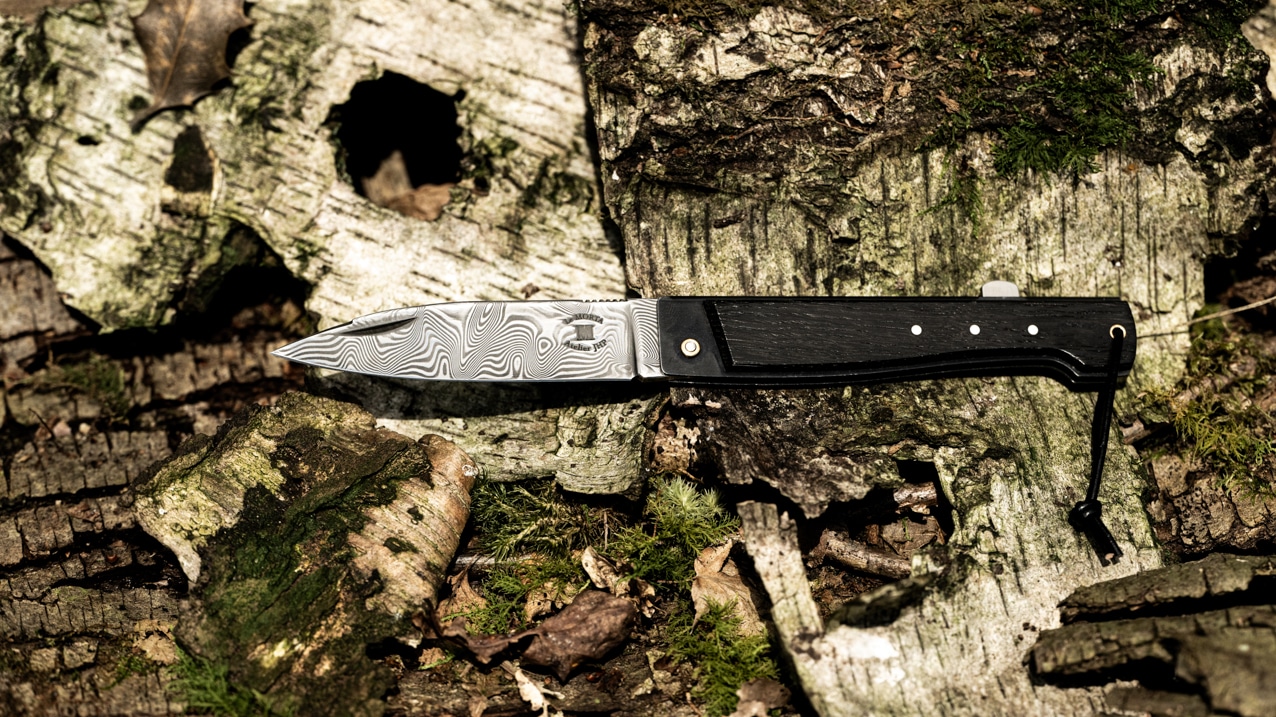

During the Crusades, Western soldiers feared the swords of the Moors. Not only did they cut with disconcerting ease, but their wavy blades, as if draped in mist, were intriguing. This fascinating pattern, resembling silky fabric, gave rise to a legend: that of Damascus steel. Even today, this blade with its moiré patterns commands respect and arouses envy. But why choose a Damascus steel blade for your knife? Is it a question of elegance, reputation, cutting power, or durability? The ancestral knowledge of cutlers provides the answer, helping you to spot counterfeits and guiding you towards an informed and passionate decision.
Why choose a Damascus blade for your knife?
Damascus steel: aesthetics and quality
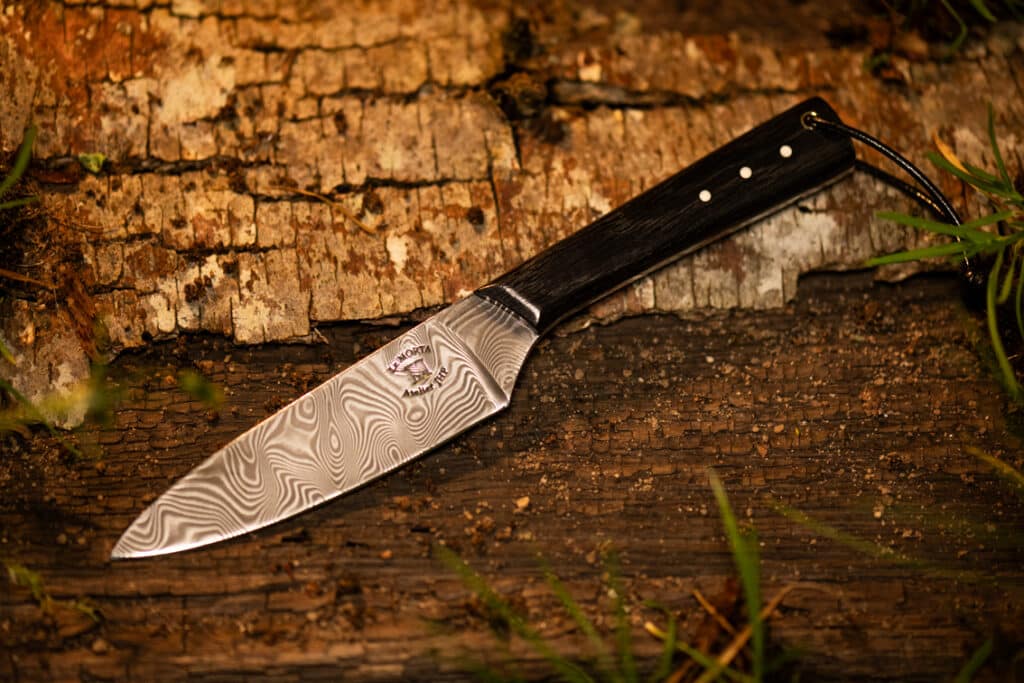
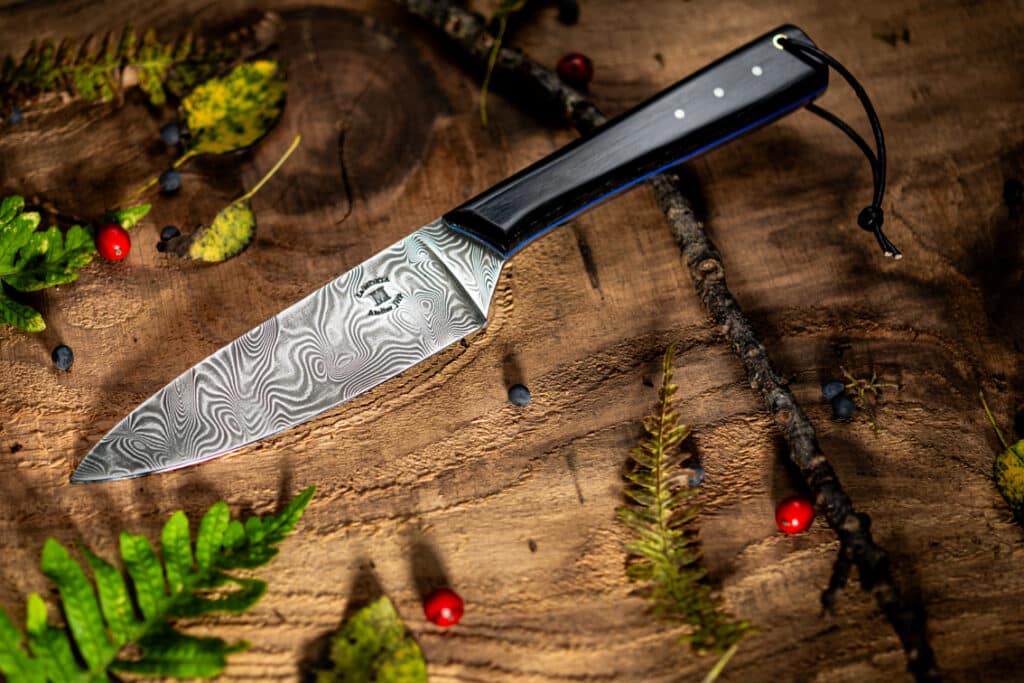
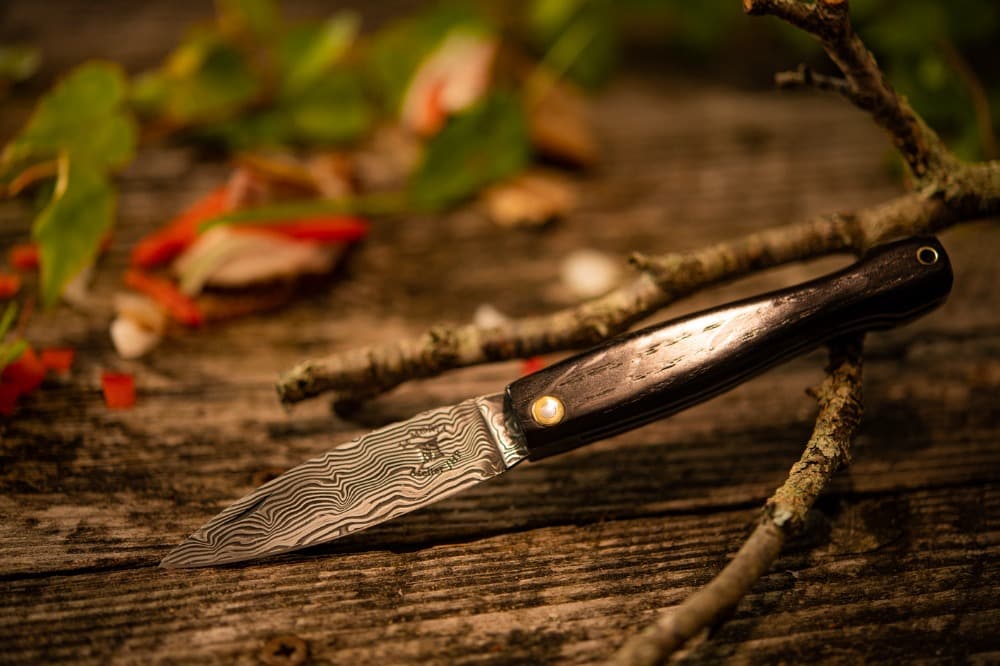
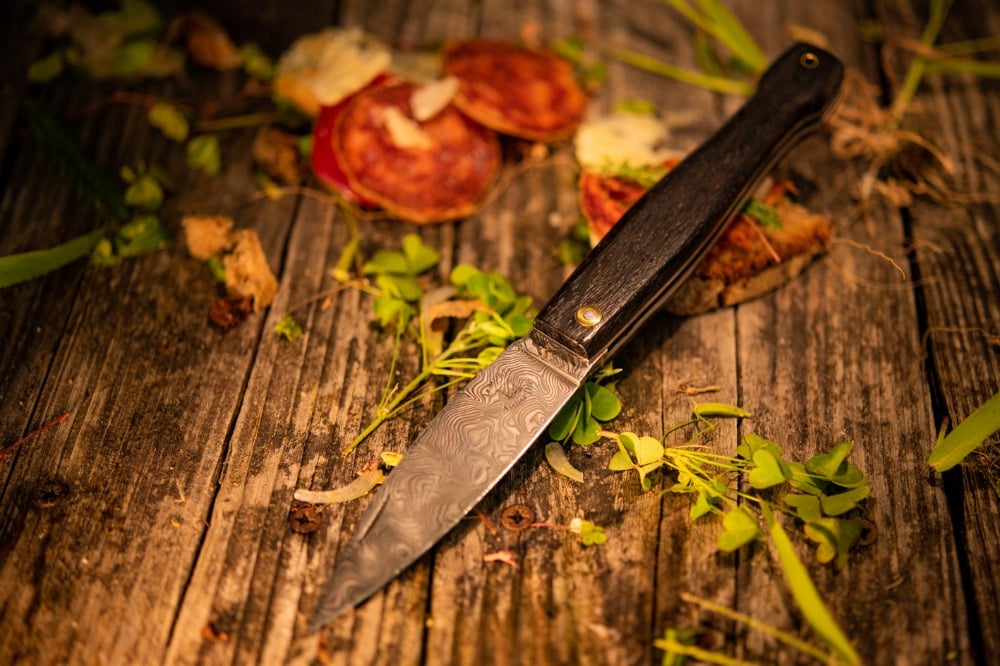
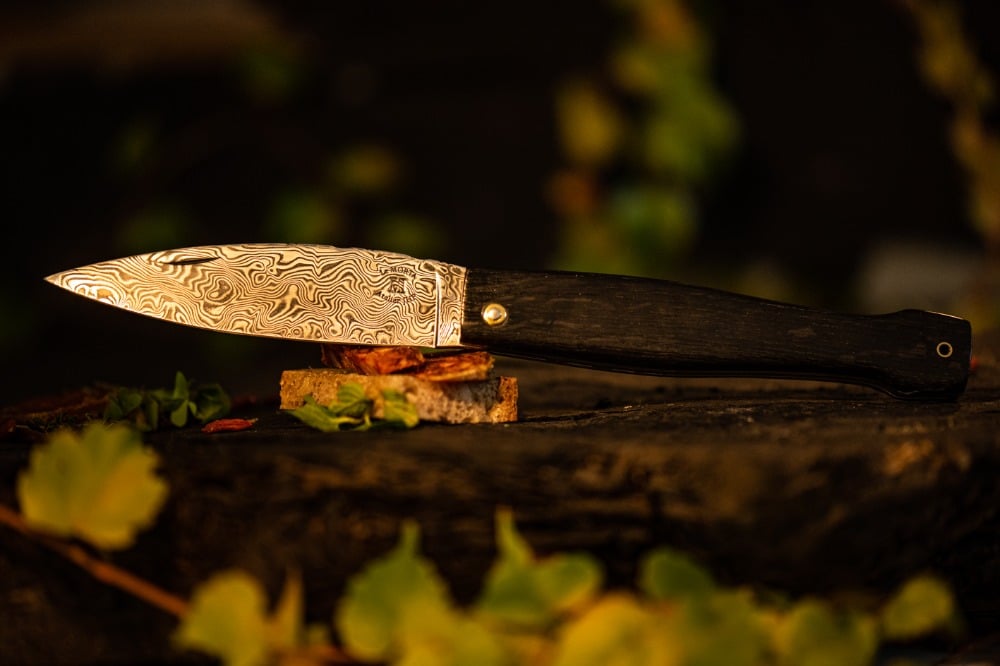
Damascus steel is instantly recognizable by its moiré effects and random patterns, which make it absolutely unique. There is no risk of confusing it with raw forged steel or stainless steel. It embodies an oriental character: singular, magnificent, and indomitable.
A Damascus blade not only cuts with elegance, it also has a long-lasting edge and exceptional strength. Listed in the French Intangible Cultural Heritage Inventory, the techniques used to manufacture Damascus steel offer many advantages.
Damascus steel is renowned for its excellent cutting edge, ease of sharpening, corrosion resistance, homogeneity, purity (absence of inclusions), and high toughness (resistance to cracking).
Are you unsure about the other steels commonly used in cutlery? Discover our articles specifically about 14c28n and 90mcv8.
The Damascus blades of Morta knives
🔪 Damascus steel produced using conventional metallurgy (metal solidification) is made from stainless steel. It is therefore particularly resistant to corrosion and suitable for outdoor, kitchen, bushcraft, hiking, and camping knives.
🔪 Its high quality and unrivalled aesthetic appeal come from its 120 layers of steel. This multi-layered structure distributes imperfections in the material, resulting in a flawless cutting edge. Its cutting strength makes it perfect for chef’s knives, hunting knives, and survival knives.
🔪 The steel used at the JHP workshop offers a hardness of 62 HRC on the Rockwell scale, which is exceptional for a knife.
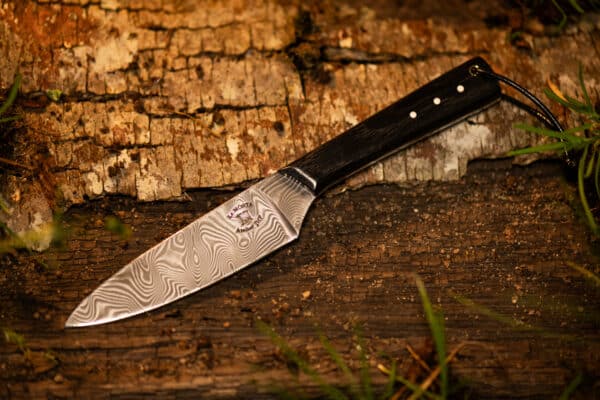
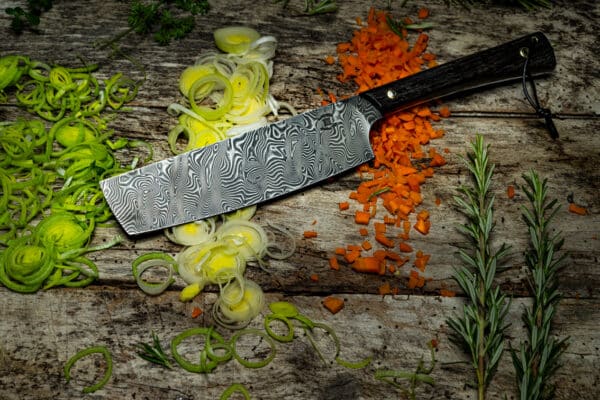
On average, the hardness of blades on the market is around 59 HRC. Some entry-level models start at 56 HRC, but their edges wear out more quickly.
It should be noted that a good blade is the result of a balance between strength, durability, sharpness, and ease of sharpening. At the JHP workshop, we always advise our visitors to choose the best compromise for them. Holding the blade allows you to identify the model that fits your hand best.
If you are buying online.
- Do you have a large or powerful palm? Look for a collection that offers a good grip.
- For precise movements, a thin, slender blade will provide greater maneuverability.
Good to know: women don’t choose the smallest models, but the ones that meet their needs. Proven fact in the workshop 😉.
Otherwise, trust your instincts! They’re unbeatable.
I find the Damascus knife that suits me.
With so many advantages, Damascus steel naturally attracts counterfeits. But how can you tell the real thing from the imitation?
How can you recognize a genuine Damascus steel blade?
Unique patterns, the result of ancestral forging techniques
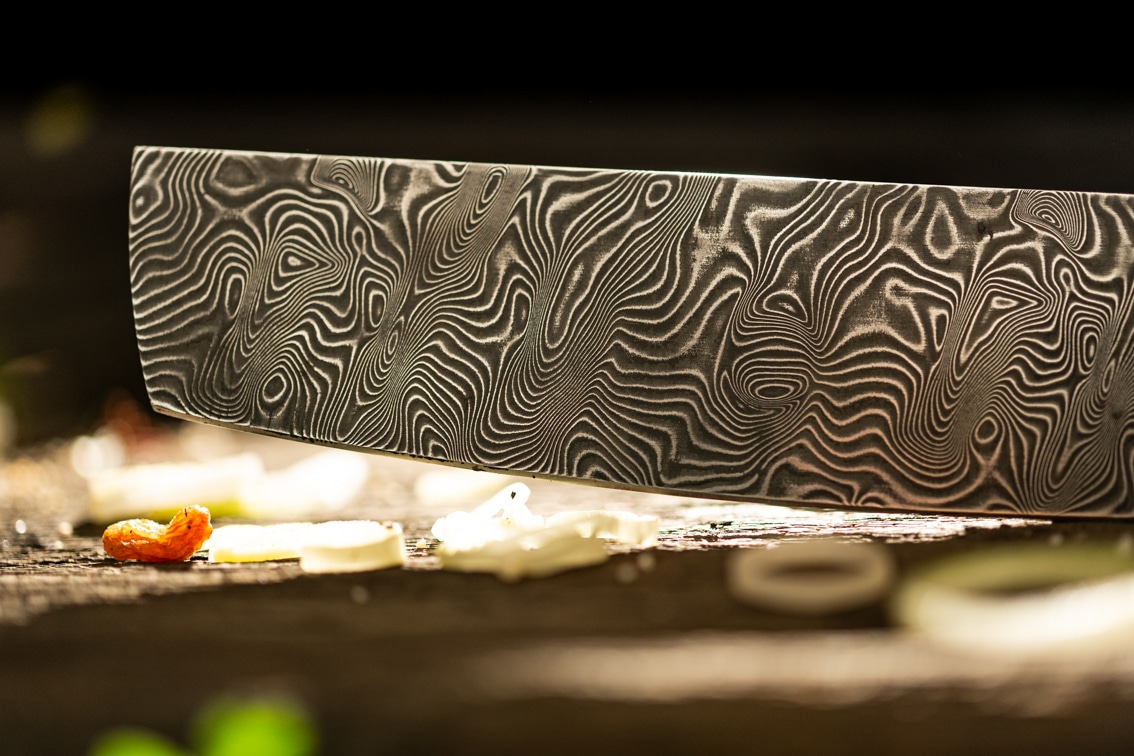
Each genuine Damascus blade embodies the history of a rare craft. In the forge, layers of steel are intertwined under the cutler’s hammer. The result is an organic, irregular, almost hypnotic pattern. It reveals shifting reflections and deep undulations that are never the same twice. This is neither a fashion trend nor a surface decoration: it is an imprint. Visual proof of a blade forged according to the rules of the art.
Traditional Damascus vs. decorative Damascus: the real differences
Not all “Damascus” knives are created equal. Welded Damascus is made by layering several types of steel, heating them, hammering them, and folding them until they fuse completely. The pattern runs through the entire thickness of the blade, up to the spine and under the guard.
In contrast, decorative Damascus steel is often laser engraved or acid treated. The result looks too perfect, excessively contrasting, and the waves fade with use. A trained eye can recognize a printed pattern, reproducible identically, which has nothing to do with the complexity of truly forged steel.
Clues for spotting counterfeits
Before buying, there are a few warning signs to look out for:
- a pattern that is too sharp, highly contrasting, or perfectly symmetrical;
- an unusually light weight, indicating lower-quality steel;
- mechanical designs that are identical from one knife to another;
- a pattern that disappears over time or when rubbed with your fingers.
Compare the patterns on several blades from the same workshop. If you see exactly the same pattern on two knives, then it is not genuine Damascus steel.
Finally, trust master knife makers. They love their craft too much to compromise with lower-quality materials.
-

Mini Solid Morta Damascus
340,00 € This product has multiple variants. The options may be chosen on the product page -
Compact fixed damascus knife
340,00 € This product has multiple variants. The options may be chosen on the product page -
XL Damascus fixed knife
460,00 € This product has multiple variants. The options may be chosen on the product page
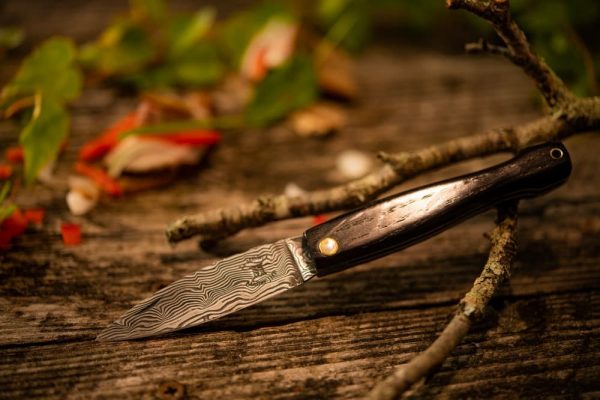
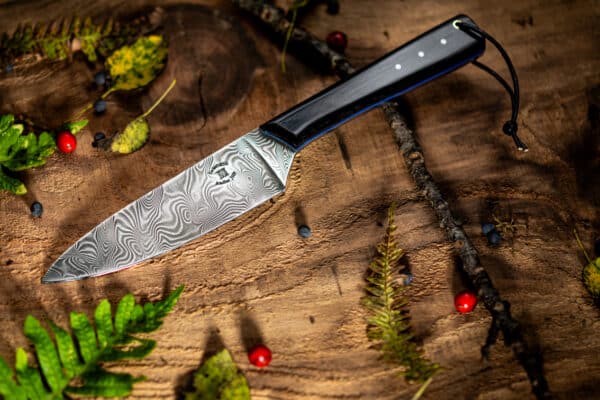
This authenticity explains why true connoisseurs are so eager to seek out exceptional pieces. Because beyond being a tool, Damascus steel has become an object of passion.
The Damascus knife, an object of collection and transmission
Why include a Damascus steel blade in your knife collection?
Knife enthusiasts (or knife collectors) are always on the lookout for a more beautiful blade to complete their collection. Damascus steel appeals to lovers of beautiful pieces because of its rarity and aesthetic appeal. But its secret weapon, the thing that makes it irreplaceable, is its soul, the story told by its patterns. They may seem random, but look closely and you will realize that they give meaning to your actions.
The knife, a family heirloom
Like a piece of jewelry, the knife is a traditional heirloom. Passed down from father to son (or mother to daughter), it reproduces the ancestral cutting techniques in the hands of each new generation.
Why not personalize this famous knife before giving it as a gift or buying it for yourself?
Personalizations available with a Damascus knife
Choose a touch that reflects the sensibility of its future owner:
- 3 mini mammoth ivory inlays;
- a blue vulcanized fiber border.
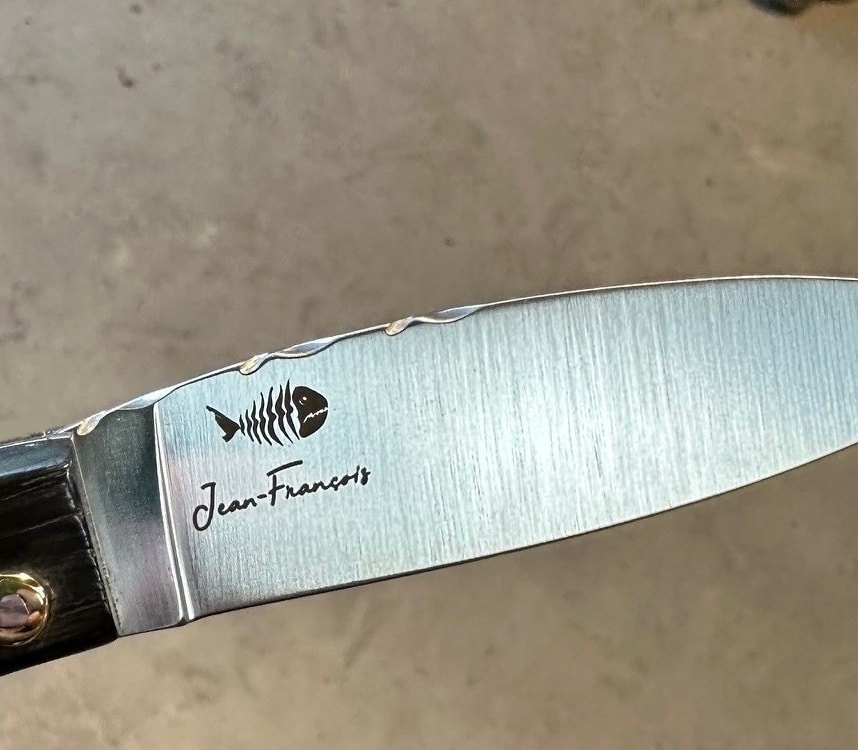
Engravings available on other steels (stainless steel, raw forged steel)
Engrave a memory on the blade and in the mind:
- a phrase, a first name, a date;
- a pictogram created by a painter;
- your logo or family crest;
- a handwritten message.
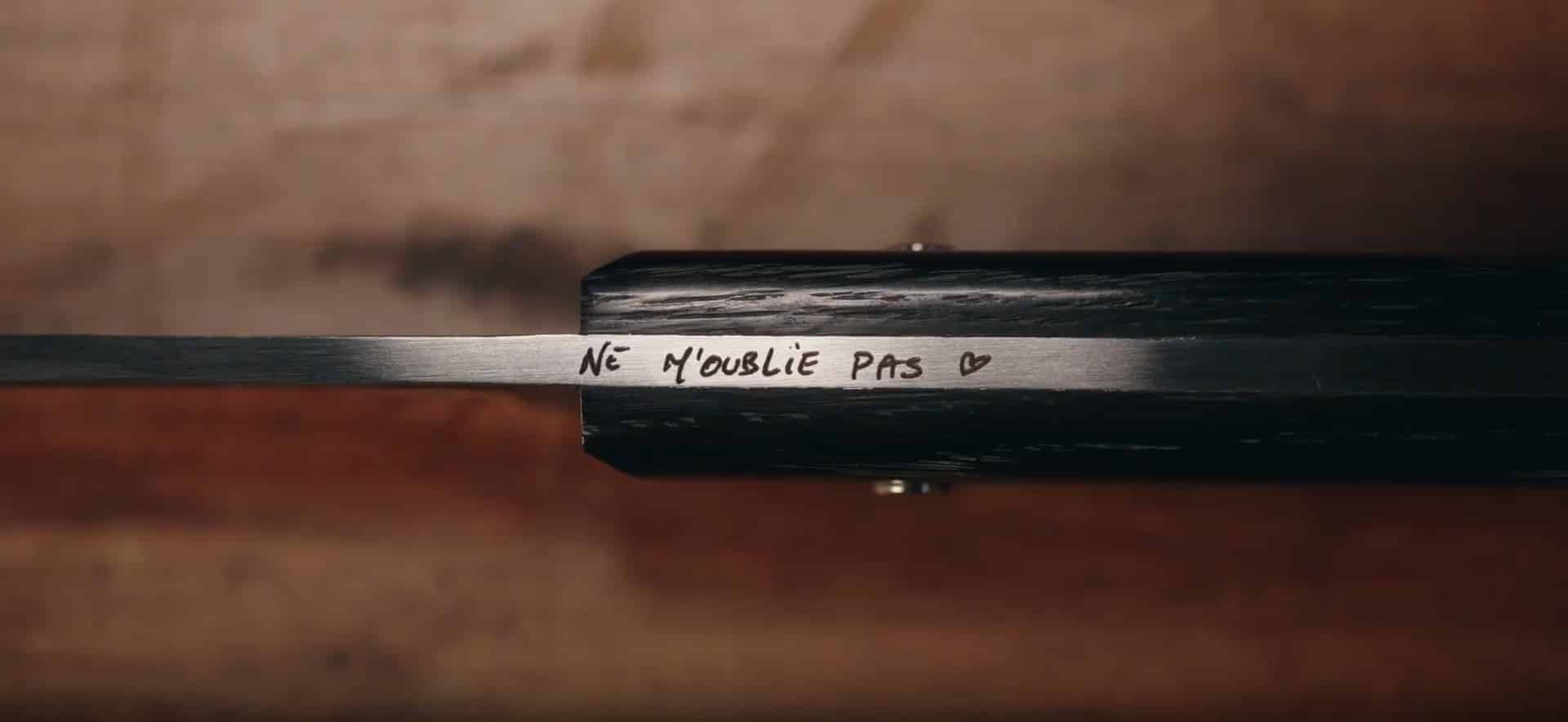
Now that you own this exceptional piece, you need to ensure that it lasts as long as it is beautiful. The good news is that caring for Damascus steel is really just a matter of common sense.
How do you care for a Damascus blade without damaging it?
How do you clean your Damascus knife?
A Damascus blade deserves special care. Nothing complicated, just a little common sense. Wipe your knife (handle and blade) with a soft, dry cloth. Even though Damascus knives are made of stainless steel, cleaning them with water is still not recommended. This is especially important because Morta must remain completely dry.
As you may know, Morta has spent 5,000 years in peat, in a humid environment. Now, it longs for a dry life.
So, in short, a soft, dry cloth. Easy, right?
No chemicals or dishwashers, just a little elbow grease (or beeswax from time to time).
How to sharpen your Damascus blade?
The secret to long-lasting sharpness lies in the movement and the hand that guides it. Our best advice: sharpen your knife yourself. The more you repeat the same movements, the more you guarantee the durability of your blade. It is best to use a natural stone. Finally, follow our cutler who guides you step by step in this video.
How to store your knife?
Finally, store your knives in a dry place, out of reach of curious hands (drawer, knife block, or case).
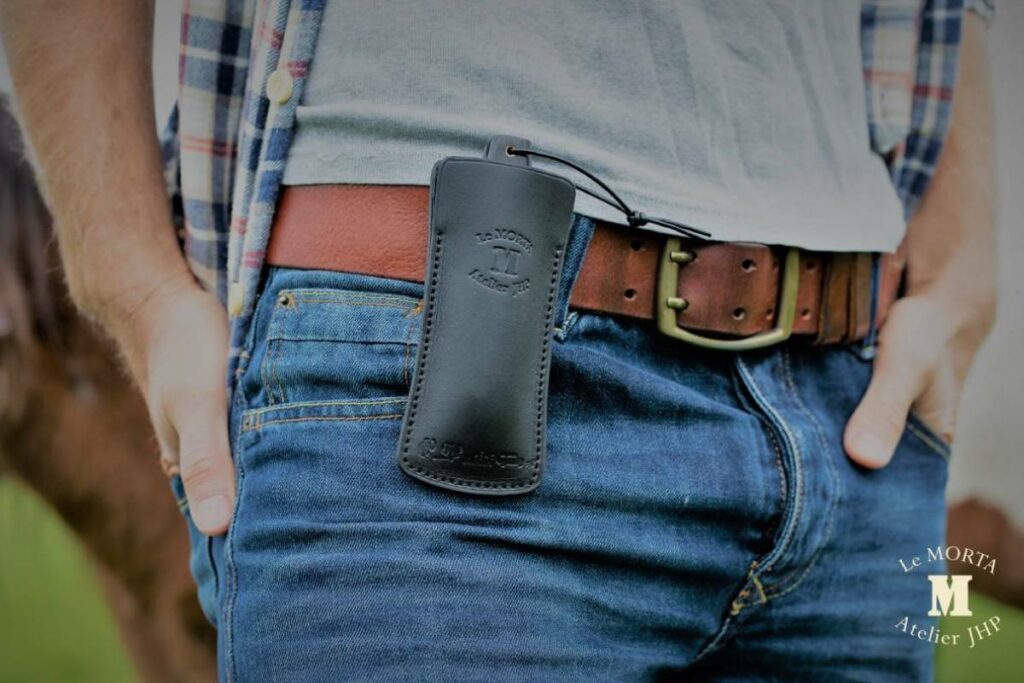
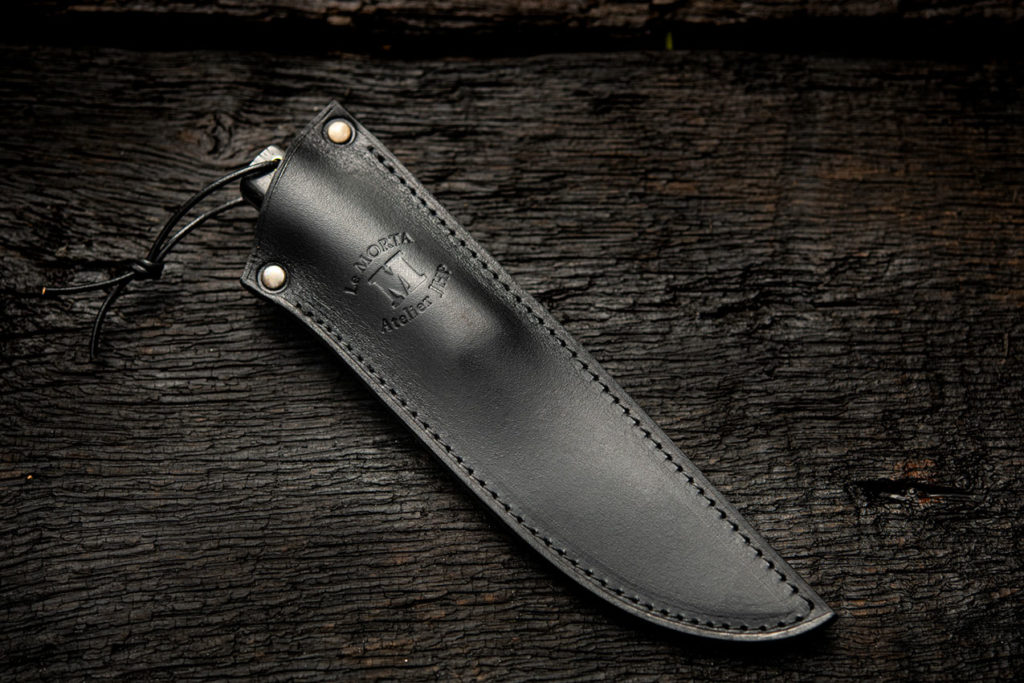
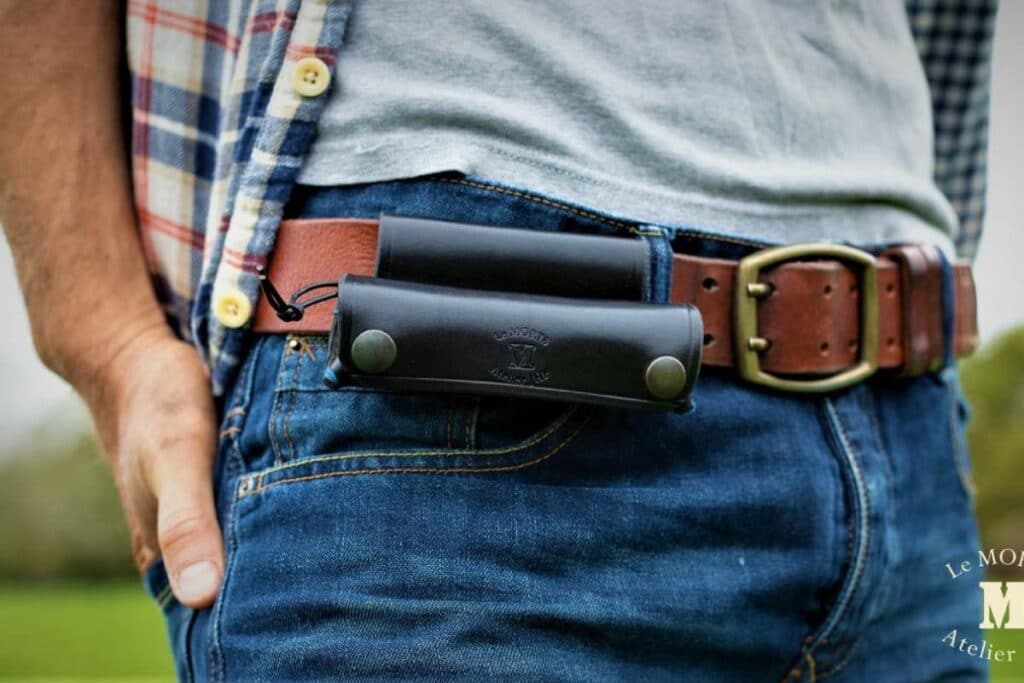
To keep it close at hand, use a suitable sheath or case to protect it.
Smart purchase: customize the color of the stitching on the cases and sheaths, which are available in black or blue (except for the EDC model).
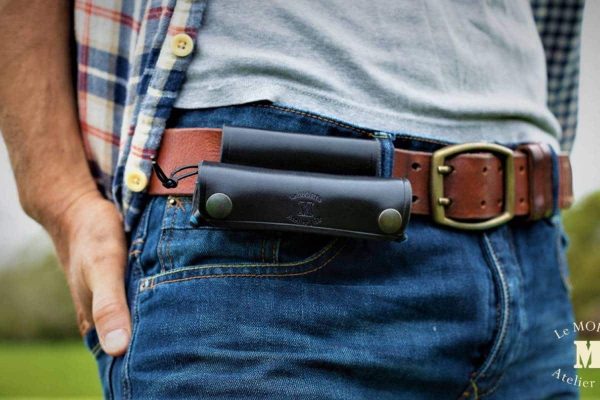
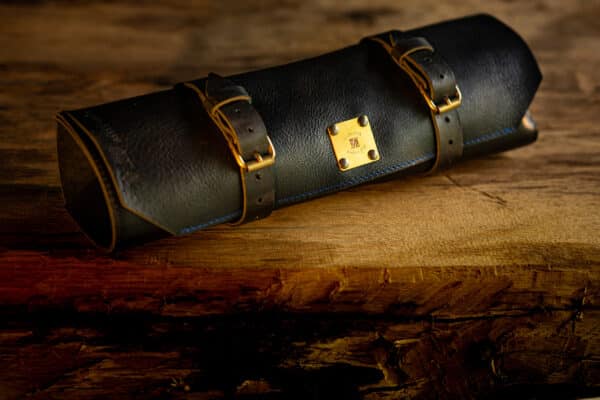
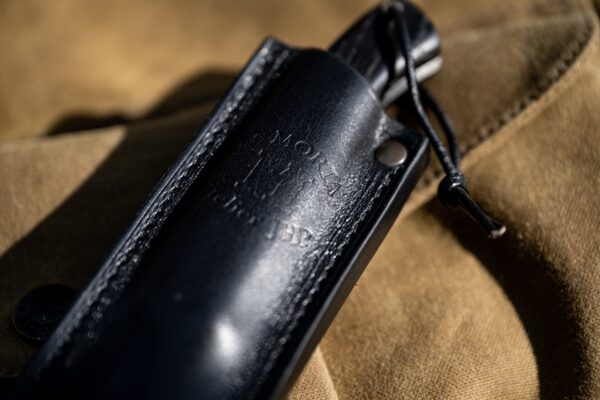
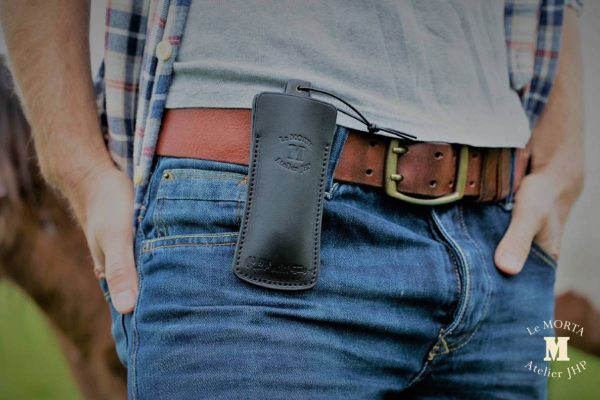
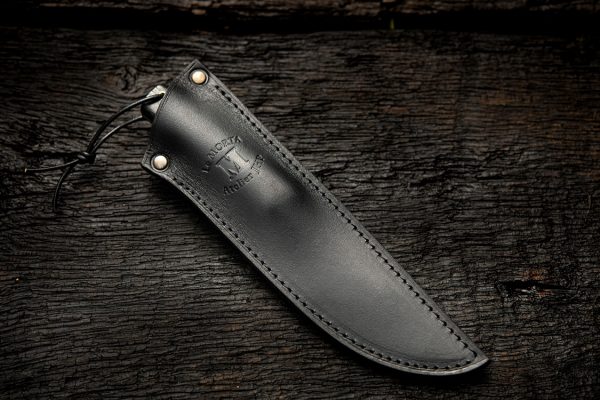
These maintenance techniques perpetuate a thousand-year-old tradition. To understand why Damascus steel is so captivating, we must go back to its legendary origins.
The fascinating history of Damascus steel, from the Orient to La Brière
Although its name evokes Syria, Damascus steel has its roots in Iran and India. Behind its black arabesques lies a legendary heritage. That of the formidable blades of the Moors, so fine and resistant that they struck the Crusader knights with admiration. People spoke of magic. It was craftsmanship.
Two great traditions forged its reputation.
- Wootz Damascus steel, created from steel ingots cast in a crucible, offered a unique pattern through natural crystallization.
- Forging Damascus steel, closer to our current techniques, comes from folding and welding successive layers, hammered while hot.
Both gave rise to unique pieces.
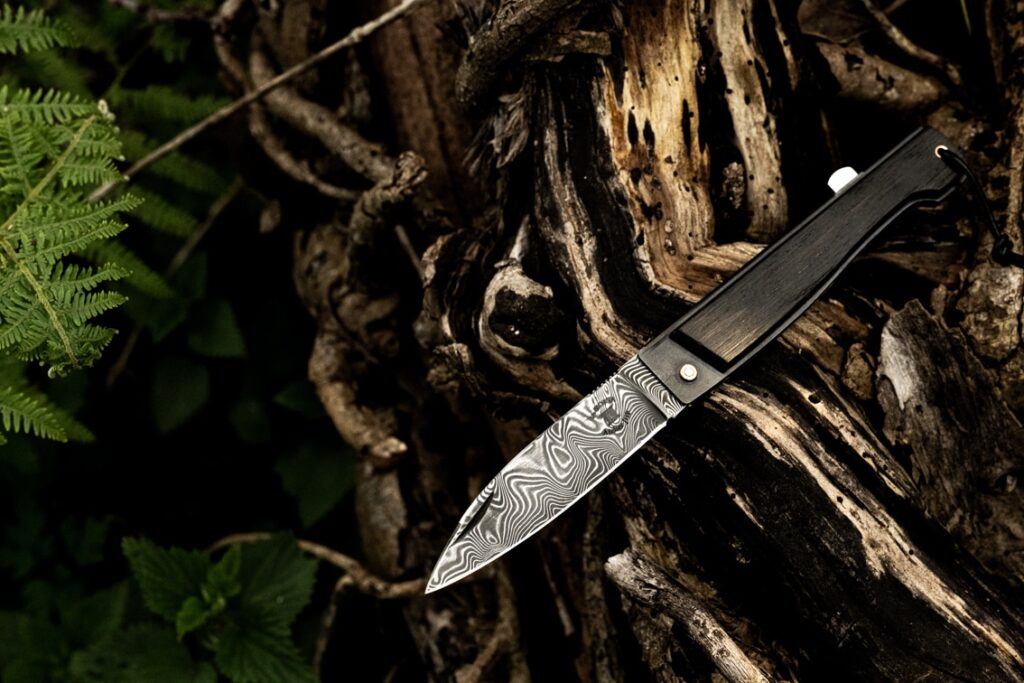
Having disappeared at the end of the 18th century, the art of Damascus steel was revived in the 19th century thanks to enthusiasts such as Jean Robert Bréant. Today, cutlers continue to preserve this link between science, patience, and intuition.
At Couteaux Morta, Damascus steel meets Morta wood, born from the Brière marshes after 5,000 years of waiting. Two materials, two thousand-year-old histories, one artisanal gesture.
This centuries-old tradition is now finding new life in French craftsmanship. At the JHP workshop, we are continuing this heritage with our own innovations.
French Damascus knives: excellence by JHP
Damascus steel captivates with its hypnotic patterns and cutting performance. Morta, a thousand-year-old wood extracted from the Brière marshes, tells a story of patience and earth. When these two materials meet in the hands of the craftsman, the handmade Damascus knife becomes an exceptional piece.
Each blade is crafted in the workshop in Saint-André-des-Eaux, each handle made in the local tradition. The Damascus Morta knife is never mass-produced: it is born of high standards, precision, and respect for the craft. It bears our signature: the JHP seal, master artisan cutler, as a mark of trust and authenticity.
Discover our complete collection of handcrafted Damascus steel knives and find the one that will accompany you throughout your life.
Choosing a handcrafted Damascus blade means combining passion and beauty.
Buying a Morta Damascus blade means choosing a combination of expertise, passion, and natural beauty.
A Damascus blade is not just an aesthetic choice. It is a decision based on high standards, precision, and tradition. It cuts cleanly, stands the test of time, catches the eye… and sometimes even moves you. At Couteaux Morta, each Damascus blade tells a story: that of the materials it is made from, the craftsman who shaped it, and the person who will carry it.
Some passionate chefs also choose Damascus for its precise cut and visual elegance on the cutting board.
Are you looking for a knife for cooking, camping, or simply to convey a little bit of yourself? Then let your instincts guide you. A blade is already waiting for you. What if it were a Damascus knife?
Choose your handcrafted Damascus knife from the models available.
Article written by the sharp pen of Christelle Lorant.🪶
Share on social networks